Sunlight can make a clear day feel harsh when it reflects off water, wet roads, snow, or a car hood. That reflected light creates glare, which can hide details and make the eyes feel tired. A Polarized Lens uses a filter to reduce much of this horizontally reflected glare. The difference may be noticeable beside a lake, on a sunny drive, or while walking along a bright beach. Colors can seem clearer. Reflections may feel less distracting.
Polarized sunglasses are not automatically the best choice for every person or situation. The filter does not guarantee ultraviolet protection, so check the product’s UV rating separately. Some digital screens can also look dim or uneven through polarized lenses, depending on their angle. In low light, tinted lenses may make visibility worse. Small details matter.
Choosing well means considering where the sunglasses will be used, how they fit, and whether the lenses provide verified UV protection. A reliable optician or product specification can help clarify those points. Still, no lens removes every source of discomfort, and individual experiences differ. That is worth remembering. Polarized lenses can improve comfort in strong reflective light, but they are not a substitute for careful driving or sensible eye protection. The right pair should feel comfortable, suit the activity, and work with—not against—daily habits.
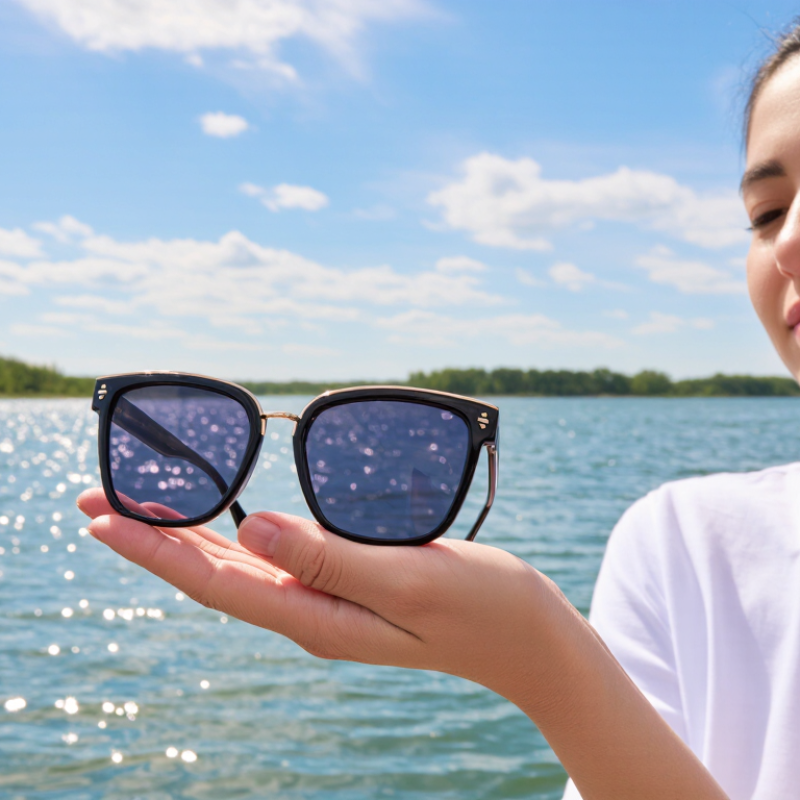
When sunlight strikes water, wet pavement, or a car hood, some reflected light becomes strongly polarized horizontally. Polarized lenses use a filter that blocks much of this horizontal component while allowing more vertically oriented light through. The American Academy of Ophthalmology describes polarized lenses as useful for reducing glare from reflective surfaces. On a lake, the change can be immediate: bright surface shimmer fades, and details beneath the water may become easier to see. Not every reflection disappears, though. Polarization reduces glare; it does not erase it.
A useful distinction: polarization is not the same as UV protection. The American Academy of Ophthalmology advises choosing sunglasses labeled to block 99% to 100% of UVA and UVB rays. Lens darkness alone is not a reliable guide. EN ISO 12312-1 classifies sunglasses by visible-light transmittance; category 4 lenses transmit 3% to 8% of visible light and are not suitable for driving. That figure describes brightness, not polarization strength. LCD screens can also look dim or uneven through polarized lenses, which is worth checking before a long drive.
| Topic | What Happens | How Polarized Lenses Help | Practical Note |
|---|---|---|---|
| Reflected glare | Light reflected from relatively flat surfaces, such as water or roads, is often strongly horizontally polarized. | A vertically oriented polarizing filter reduces much of this horizontally polarized reflected light. | The amount of glare reduction depends on the surface, viewing angle, and lighting conditions. |
| Driving on wet roads | Sunlight reflected by a wet road can create bright glare that makes details harder to see. | Polarized lenses can reduce reflected glare and may make the view more comfortable. | They do not replace careful driving, and some vehicle displays may be harder to read through them. |
| Fishing and water activities | Bright reflections from water can obscure the view of objects beneath or beyond the surface. | Reducing surface glare can improve visual comfort and make underwater features easier to distinguish in some conditions. | Visibility still depends on water clarity, depth, sunlight, and the angle of observation. |
| Snow and other bright surfaces | Snow and light-colored surfaces can reflect intense light and contribute to visual discomfort. | Polarization can reduce reflected glare from suitable angles. | Lens darkness and UV protection are separate properties; check the lens specifications for both. |
| Digital screens | Some LCD screens emit polarized light, so their appearance can change when viewed through polarized lenses. | Polarized lenses may make certain screens look dim, uneven, or nearly black at particular angles. | Check important displays while wearing the sunglasses before relying on them for travel or work. |
| UV protection | Ultraviolet protection is a lens feature distinct from polarization. | Polarization filters glare; it does not by itself indicate how much UVA or UVB radiation a lens blocks. | Choose sunglasses specifically labeled to provide 100% UVA and UVB protection or UV400 protection. |
| Best fit for use | Polarized lenses are especially useful when reflected glare is a frequent problem. | They can improve comfort in activities such as boating, fishing, and driving in bright conditions. | For general use, consider glare conditions, screen visibility, fit, lens tint, and verified UV protection. |
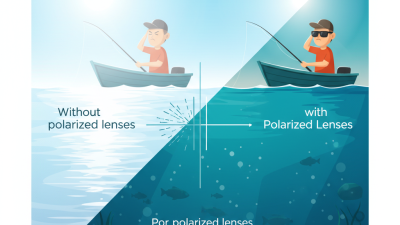
Glare is scattered light that makes details harder to see. On a bright road, reflections from wet pavement can wash out lane markings; beside water, they can create a sharp, shimmering band. Your eyes work harder to separate useful detail from that brightness. Squinting and eye fatigue may follow. It can be distracting.
Polarized lenses filter much of the horizontally reflected light that causes this discomfort. They can make surfaces look calmer and improve visual comfort outdoors, especially around water or on the road. However, polarization is not UV protection. Check that sunglasses also provide adequate UVA and UVB protection. Polarized lenses can also make some digital screens harder to read, so test them with your usual devices.
The World Health Organization’s 2019 World Report on Vision estimates that at least 2.2 billion people have near or distance vision impairment. That figure does not measure glare, but it is a useful reminder that visual needs vary widely. Polarization may ease one source of discomfort; it cannot correct every vision problem. And it is not magic. A lens that feels comfortable in one setting may be less practical in another, so the choice deserves a little thought.
Polarized lenses reduce glare from flat surfaces such as wet roads, water, and snow. They filter much of the horizontally reflected light that can make bright scenes uncomfortable. With less glare, details may look clearer, and squinting can ease during outdoor activities. That matters on a sunny drive or beside a lake. Colors may also seem more natural, though the effect varies with lighting and lens tint.
Polarization is not the same as UV protection. Check that sunglasses state they provide 100% UVA and UVB protection; dark lenses alone do not guarantee it. Polarized lenses can also make some phone screens, car displays, or instrument panels harder to read at certain angles. The benefit is not universal. If you depend on a display outdoors, check it while wearing the sunglasses before relying on them. Glare reduction can help comfort, but it does not replace careful vision or safe driving habits.
Tips: Try the lenses outdoors and tilt your head toward a screen to check readability. For road use, look at a dashboard display before buying. Choose a comfortable fit that blocks light from the sides, and keep the lenses clean; smudges can scatter light and blur fine details.
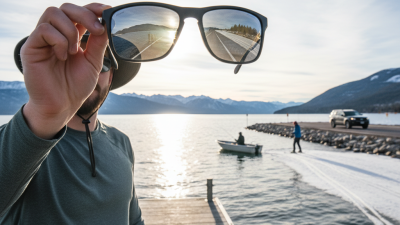
Polarized lenses are most useful when bright light bounces off a flat surface and into your eyes. Think of a sunny drive after rain, with white glare flashing from the road, or a walk beside a lake where the water looks like a sheet of light. Polarization filters much of this reflected glare, which can make details easier to see and reduce squinting. The difference is often most noticeable around water, snow, and shiny pavement.
They can also help during outdoor activities such as fishing, cycling, or spending time at the beach. On the water, reduced surface glare may make it easier to notice movement beneath the reflections, though visibility still depends on water conditions and light. While driving, polarized lenses can make a bright road feel more comfortable. Not magic, though. They do not replace lenses that provide reliable UV protection, and they may make some dashboard or phone screens harder to read.
Consider the setting before choosing them. On cloudy days or in dim conditions, glare reduction may matter less, and darker lenses can make it harder to see. Some people also find that polarized lenses reveal uneven patches on roads or other surfaces more sharply. That takes getting used to. If you rely on digital displays outdoors, check how they look through the lenses before wearing them all day.
Polarized lenses are especially useful around water and glass, where reflected light can create intense glare. This chart shows the approximate Brewster angle for light reflecting from each material into air, calculated using typical visible-light refractive indices. Near this angle, reflected light is strongly horizontally polarized—the kind of glare polarized lenses are designed to reduce. Actual glare depends on the surface and viewing conditions.
Polarized lenses reduce reflected glare by filtering much of the horizontally scattered light bouncing off roads, water, and glass. This can make a bright drive or a day near the shore more comfortable. But less glare does not mean perfect vision. Reflections can also reveal surface details, such as ripples or a slick patch of pavement, so conditions still deserve attention.
The biggest compatibility issue is with screens. Many LCD displays use polarized light, and sunglasses can make them look dim, patchy, or oddly colored. A phone may seem normal when held upright, then darken as you tilt your head. Not every screen. The effect depends on the display and lens orientation. Check the screens you use often before relying on a pair for driving or outdoor work.
Polarization is also separate from UV protection. Check that sunglasses provide stated UVA and UVB protection; the polarized label alone does not confirm it. Some vehicle dashboards and heads-up displays may be harder to read through polarized lenses, particularly at certain angles. I still check a dashboard before a long drive, even when the lenses feel comfortable. It is a small habit, and easy to forget.