Top UV Ray Sunglasses for Global Buyers?
Choosing the Top Uv Ray Sunglasses for Global Buyers requires more than comparing lens colors, prices, or fashionable frames. The World Health Organization (WHO) identifies excessive ultraviolet radiation as a contributor to cataracts, photokeratitis, and other eye damage. Its Global Solar UV Index recommends protective eyewear when UV levels are high. A bright beach, snowy mountain, or open driving route can reflect ultraviolet rays toward the eyes from several directions.
Certification matters. The U.S. Food and Drug Administration (FDA) advises buyers to select sunglasses that block both UVA and UVB radiation. In Europe, EN ISO 12312-1 sets requirements for general-purpose sunglasses, including optical performance and UV protection. These standards do not automatically make every product equal. Labels can be unclear. Marketing can sound stronger than testing.
This guide compares lens protection, fit, durability, optical clarity, and regional compliance. Polarized lenses may reduce glare from wet roads and water, but polarization alone does not prove full UV protection. Dark lenses can feel comfortable while offering inadequate filtering. That detail deserves attention. The Vision Council’s consumer research consistently shows that sunglasses remain both a vision-care product and a lifestyle purchase, creating room for misleading priorities. A reliable buying decision should combine manufacturer test information, recognized standards, and practical user experience. No single frame suits every face, climate, or prescription need. Even this approach has limits, because supply chains and certifications can change. Global buyers should verify current documentation before ordering.
Define UV Risk: WHO Identifies UV Exposure as a Major Eye-Health Hazard
Top UV Ray Sunglasses for Global Buyers?
The World Health Organization identifies ultraviolet exposure as a major eye-health hazard. Repeated exposure can contribute to cataracts, photokeratitis, and other eye problems. Strong sunlight is not limited to beaches. Pavement, water, snow, and glass can reflect UV rays into exposed eyes. Children, outdoor workers, and people living near the equator may face higher daily exposure. Clouds reduce brightness, but they do not remove ultraviolet radiation.
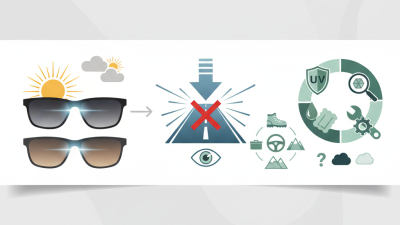
For global buyers, sunglasses should block 99–100% of UVA and UVB rays. A UV400 claim is widely used, but buyers should still check testing information and local product standards. Dark lenses alone are not enough. They may reduce visible light while allowing harmful UV through. Polarized lenses can reduce glare from wet roads, yet polarization does not automatically mean UV protection. A close-fitting frame, comfortable nose bridge, and lenses covering the side areas can improve practical protection. Fit matters more than appearance.
Tips:
Check the label before checking the color. Wear sunglasses during long outdoor periods, even on bright cloudy days. Replace scratched lenses when vision becomes unclear. Cheap glasses are not always unsafe, but vague claims deserve caution. I would not trust a dramatic “100% protection” phrase without supporting details. WHO guidance is useful, though real protection also depends on consistent daily use. Loose frames are easy to remove, and that small habit can weaken otherwise good protection.
Verify UV400 Protection: Confirm 99%+ UVA and UVB Attenuation Claims
Top UV Ray Sunglasses for Global Buyers?
Verify UV400 Protection: Confirm 99%+ UVA and UVB Attenuation Claims
UV400 is a useful starting point, but it is not a complete guarantee. The term generally means lenses should block ultraviolet wavelengths up to 400 nanometers. According to the International Commission on Non-Ionizing Radiation Protection, UVA covers 315–400 nm, while UVB covers 280–315 nm. Buyers should request a laboratory report showing spectral transmittance across both ranges, not only a printed UV400 label.
Look for measured attenuation of at least 99% for UVA and UVB. That means no more than 1% ultraviolet transmission at tested wavelengths. ISO 12312-1 provides testing guidance for general-purpose sunglasses, including optical quality and ultraviolet transmittance. The World Health Organization’s Global Solar UV Index recommends protective measures when the index reaches 3 or higher, especially near reflective surfaces such as water, snow, and pale concrete. Tiny details matter.
A reliable report should identify the test method, sample number, wavelength range, and laboratory qualification. “Blocks 100% UV” sounds stronger than “99% attenuation,” yet vague marketing can hide incomplete testing. Polarization is different; it reduces glare but does not automatically prove UV protection. Lens color is also unreliable. Dark lenses without verified filtering may feel comfortable while allowing harmful rays through. I would question any claim lacking raw test data. Even professional testing has limits, because one sample may not represent every production batch.
Apply Global Standards: ISO 12312-1, EN ISO 12312-1, and FDA Rules
Top UV Ray Sunglasses for Global Buyers?
Reliable UV protection begins with documented testing, not a dark lens. Buyers should request evidence that sunglasses meet ISO 12312-1 for general use. This standard evaluates optical quality, filtering performance, durability, and basic safety. European shipments may reference EN ISO 12312-1, the European adoption of the international standard. The documents should identify the exact frame and lens combination. A test report for another model is not enough.
In the United States, sunglasses are regulated as medical devices under FDA requirements, including impact-resistance provisions. FDA compliance does not mean every product is “FDA approved.” That phrase can mislead buyers. Importers should check labeling, manufacturer details, protective performance, and required records before placing large orders. UV400 wording can be useful, but it should support verified test results. I would also inspect sample lenses under bright outdoor conditions. Some cheap samples look impressive, yet their hinges loosen quickly.
Tips: Ask for recent laboratory reports, product photos, lens markings, and a written declaration of conformity. Check whether the report covers UVA and UVB protection. Confirm country-specific labeling before shipment. Darker lenses are not automatically safer. That detail is often overlooked. Keep purchase records and inspection results for traceability. Standards guide decisions, but they do not replace practical quality checks.
The chart shows the visible light transmittance ranges used for sunglass filter categories in ISO 12312-1 and EN ISO 12312-1. Category 0 is the lightest filter, while Category 4 is the darkest and is not suitable for driving. Visible light transmittance is different from ultraviolet protection: buyers should also verify UV protection claims, product labeling, impact-resistance requirements, and applicable FDA rules for the target market.
Compare Lens Categories: ISO 12312-1 Defines Five Visible-Light Classes
Top UV Ray Sunglasses for Global Buyers?
ISO 12312-1 divides sunglasses into five visible-light categories, from 0 to 4. Category 0 transmits 80–100% of visible light, creating a very light tint. Category 1 allows 43–80%, while Category 2 transmits 18–43%. Category 3 permits only 8–18%, making it suitable for strong sunlight. Category 4 transmits 3–8% and is intended for exceptional glare, not road driving.
These categories describe brightness control, not complete ultraviolet performance. Buyers should check the product’s UV400 claim or verified UV transmittance data. ISO testing also considers optical quality, filter durability, and basic safety performance. That distinction matters. A very dark lens can still be poorly made. The World Health Organization’s Environmental Burden of Disease report associates solar ultraviolet exposure with about 1.5 million disability-adjusted life years annually, although newer estimates may vary.
For international sourcing, Category 3 often offers the most practical balance for beaches, high-altitude travel, and open water. Category 2 may suit daily urban use with changing light.
Category 1 feels comfortable indoors but offers limited glare reduction. Category 4 looks powerful. It is not automatically better.
In my experience, buyers sometimes confuse darkness with protection, and that mistake deserves more attention. Product files should list the lens category, UV test method, standard version, and intended-use limits clearly.
Rank Global Picks by Fit, Coverage, Polarization, and Test Reports
Top UV Ray Sunglasses for Global Buyers?
Global buyers should rank sunglasses by measurable protection, not lens darkness.
The World Health Organization reports that ultraviolet exposure contributes to up to 20% of cataract cases. A credible pair should state 100% UVA and UVB blocking, supported by test results against ISO 12312-1 requirements. Look for laboratory documentation, not only printed claims. Labels can be vague.
Fit affects real coverage.
Wraparound frames reduce side exposure, especially on snow, water, and pale concrete. The WHO Global Solar UV Index identifies stronger risk at high altitudes and near reflective surfaces. Choose lenses that sit close to the face without touching eyelashes. Wide temples help block peripheral glare. Yet, very tight frames may fog during cycling or humid travel.
Polarization improves visual comfort by reducing reflected glare from roads and water. It does not automatically prove UV protection. Check both claims separately. Independent test reports should show wavelength limits, lens uniformity, impact performance, and sample numbers. A 2022 ISO revision emphasizes performance testing for general-purpose sunglasses, but local labeling systems may differ. That matters for international purchases. My practical ranking favors verified coverage over fashionable darkness. Still, fit remains subjective; one frame can seal well on a narrow nose and leave gaps on another. Test the fit in daylight, then reconsider.