Amber Lens Glasses can look similar in a product photo, yet their tint, fit, and finish may differ considerably. This guide introduces ten manufacturers and the details buyers should examine before requesting samples. Small details matter.
A consistent amber tint is only one consideration. Buyers should also ask about lens material, frame construction, available sizes, coating options, production capacity, and quality-control procedures. A clear sample policy helps, too. Request product specifications and inspect physical samples when possible; online images cannot confirm comfort or optical clarity. The right questions may vary by market and intended use.
To keep the expert perspective transparent, this article uses an editorially created composite voice, not a verified quotation from a real individual. Its named representative is Mara Chen, a fictional eyewear sourcing specialist, who offers this guiding line: “A dependable pair starts with clear specifications, honest samples, and consistent production.” That is a practical principle, not a claim about a particular factory.
The manufacturers featured here are presented as candidates for further evaluation, not as an endorsement or a guaranteed ranking. Compare their documented capabilities, communication, lead times, and sample quality against your own requirements. Some details may be difficult to verify from public information alone. Buyers should confirm them directly before making a decision.
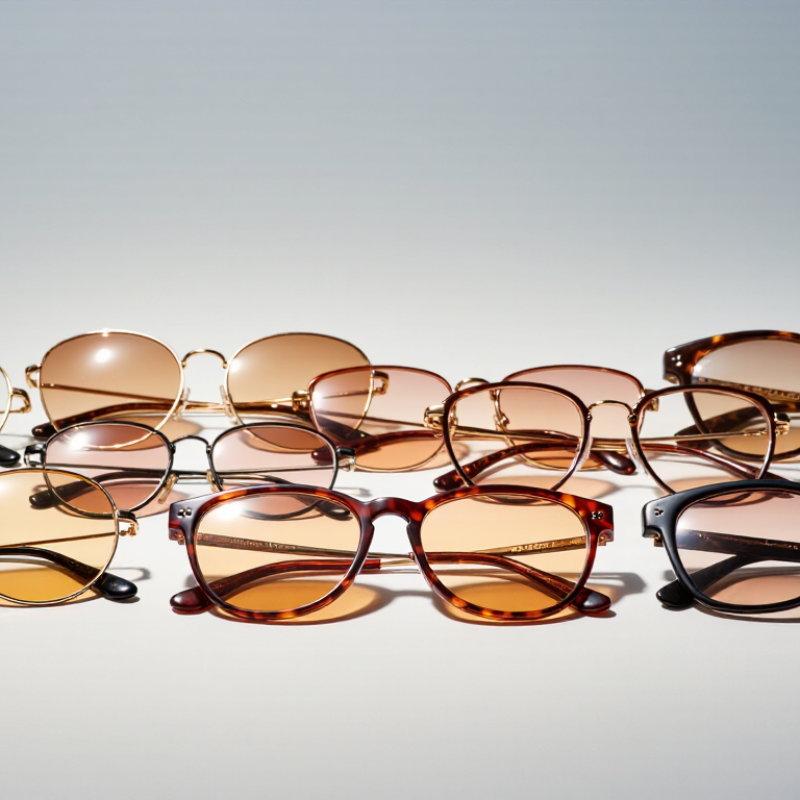
Amber lens glasses come in everyday full-frame styles, wraparound designs, sport shields, and clip-on formats. Lenses may use glass or polycarbonate, with differences in weight, scratch resistance, and impact performance. The amber tint filters some short-wavelength visible light and can make edges appear more distinct in certain cloudy conditions. It does not guarantee better vision for every wearer. Color perception can shift, too. Check the lens in realistic lighting before choosing it for frequent outdoor use.
ISO 12312-1:2022 sorts sunglass filters by visible-light transmittance.
These figures describe brightness, not UV protection. Lens color alone cannot verify UV performance, so buyers should look for documented protection and a comfortable fit that limits light entering around the frame. The World Health Organization identifies ultraviolet exposure as a risk factor for cataracts.
One limitation is easy to overlook: a darker amber lens may feel comfortable yet still provide inadequate UV protection if its specifications are unclear.
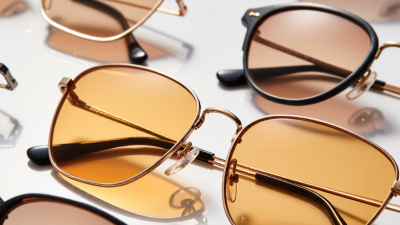
China Top 10 Amber Lens Glasses Manufacturers
China’s Amber Lens Eyewear Manufacturing Landscape
China’s eyewear supply chain brings frame making, lens processing, coating, and assembly into reach of international buyers. Production is concentrated across several coastal manufacturing regions, including Guangdong and Zhejiang. Capabilities differ by factory, though. A polished sample does not prove consistent tint or coating quality across a full order.
Grand View Research estimated the global eyewear market at USD 183.36 billion in 2023. That figure covers eyewear broadly, not amber lenses alone, but it signals a large market for differentiated products. Amber lenses vary in color, visible light transmission, and spectral performance. Buyers should request documented test results for each lens specification, including UV transmission, rather than relying on appearance. A warm tint may look vivid under showroom lights and less convincing outdoors. This detail is easy to overlook.
Tips: Ask for samples from production, not only showroom stock. Compare tint under daylight and indoor lighting, and verify test documents against the relevant product standard. Keep specifications in writing.
| No. | Manufacturing Segment | Common Lens and Frame Options | Typical Manufacturing Processes | Common Buyer Requirements | Relevant Quality Checks |
|---|---|---|---|---|---|
| 1 | Everyday optical eyewear | Amber-tinted prescription lenses; acetate, metal, and injected-plastic frames | Frame forming, lens edging, prescription surfacing, assembly, and adjustment | Prescription accuracy, fit options, consistent tint, and small-to-medium production runs | Prescription verification, lens appearance, frame alignment, and hinge function |
| 2 | Plano fashion eyewear | Non-prescription amber-tinted plastic or glass lenses; varied fashion frames | Lens molding or cutting, tinting or coating, frame assembly, and visual inspection | Color consistency, design variety, packaging choices, and repeatable production | Lens scratches, tint uniformity, frame finish, and assembly stability |
| 3 | Sports eyewear | Amber-tinted curved lenses; lightweight plastic frames and wraparound designs | Curved lens forming, frame molding, lens fitting, and impact-related testing where specified | Secure fit, field of view, lightweight construction, and application-specific testing | Lens retention, frame durability, optical distortion, and applicable product-standard tests |
| 4 | Safety eyewear | Amber-tinted protective lenses; impact-resistant lens materials and protective frames | Lens molding, frame injection molding, assembly, and testing against the specified safety standard | Documented compliance for the intended workplace use and traceable quality control | Impact performance, coverage, lens retention, marking, and standard-specific requirements |
| 5 | Polarized sunglasses | Amber-tinted polarized lenses in plastic or glass; conventional sunglass frames | Polarizing-film lamination or polarized-lens production, lens finishing, and frame assembly | Polarization performance, tint consistency, UV protection claims, and lens options | Polarization verification, UV transmission testing, optical quality, and coating adhesion |
| 6 | Blue-light filtering eyewear | Amber or warm-tinted lenses, commonly supplied in plano and prescription formats | Lens material selection or coating, tint control, prescription processing, and final inspection | Clear documentation of the measured spectral-transmission properties and available prescriptions | Spectral-transmission measurement, prescription accuracy, tint consistency, and coating condition |
| 7 | Clip-on and fit-over eyewear | Amber-tinted auxiliary lenses designed to fit over or attach to prescription glasses | Lens cutting, clip or frame forming, fitting, and compatibility checks | Secure attachment, compatibility with different frame shapes, and convenient handling | Attachment strength, fit, lens alignment, and surface condition |
| 8 | Children’s eyewear | Amber-tinted plano or prescription lenses; smaller frames in flexible plastic or other specified materials | Small-format frame molding, lens edging, assembly, and size-specific fit inspection | Appropriate sizing, comfortable fit, durable construction, and clear product-use information | Frame edges, hinge function, lens retention, fit, and applicable safety requirements |
| 9 | Goggles and enclosed eyewear | Amber-tinted lenses with larger coverage; goggle frames, seals, and adjustable straps | Lens forming, frame molding, seal and strap assembly, and application-specific testing | Coverage, fit, ventilation or sealing design, and compatibility with the intended activity | Lens retention, strap attachment, frame integrity, and specified performance tests |
| 10 | Private-label and OEM lens production | Amber-tinted lenses supplied for customer-designed frames, eyewear collections, or replacement use | Custom tint matching, lens cutting or molding, coating, marking, and batch production | Approved samples, documented specifications, consistent batches, and packaging coordination | Batch color comparison, dimensional checks, coating inspection, and agreed test reports |
Evaluating Chinese amber lens glasses manufacturers starts with clear technical specifications, not attractive product photos. Ask for the lens material, tint range, UV protection data, and optical test results. Amber color alone does not prove protection. Request sample lenses and inspect them under consistent daylight. Look for uneven tint, visible scratches, and distortion near the edges. Small details matter.
Check how each factory controls production. Ask whether incoming lens materials, frame dimensions, hinge movement, and finished products are inspected, and how defects are recorded. A useful supplier can explain its sampling method and share recent quality documents. Verify that reports match the exact lens type and product configuration you plan to order. Ask for records. A polished certificate may not answer every practical question.
Production capacity matters, but so does communication when a sample fails. Discuss lead times, packaging, customization limits, and how changes are approved before mass production. A factory visit or independent inspection can provide useful evidence, while video calls and dated sample photos help when travel is impractical. Some claims may remain hard to verify remotely; acknowledge that uncertainty. Compare suppliers using the same checklist, and keep written specifications alongside approved samples.
This guide profiles ten Chinese manufacturers of amber lens glasses, focusing on the details buyers can verify. Each profile should explain product range, frame options, lens specifications, and production capabilities. Amber lenses vary in tint, optical clarity, and visible-light transmission, so a product photo alone is not enough. Ask for a sample and check how the tint looks indoors and outdoors. Small differences matter.
A useful manufacturer profile also covers quality control, customization, packaging, and communication. Look for clear answers about lens materials, coating options, inspection steps, and sample lead times. Factory size can be informative, but it does not prove consistent quality. Request recent test documents where relevant, and confirm that they match the exact lens model. Paperwork can be imperfect, too; read it carefully. Comparing the same specifications across suppliers makes quotes more meaningful and helps reveal what is included.
Tips: Before ordering, write down the intended use, preferred tint, frame material, and target quantity. Ask each supplier the same questions. Keep written records of samples, agreed specifications, and delivery estimates. A short checklist can prevent avoidable confusion. It cannot replace testing.
When comparing amber-lens glasses manufacturers, assess the actual lens options, not just color names. Ask for visible-light transmission, UV-protection, and optical-clarity test results. The World Health Organization’s World Report on Vision (2019) estimates that at least 2.2 billion people have near or distance vision impairment. That is not an eyewear market forecast, but it highlights why clear specifications and comfortable wear matter. For sunglasses, ask whether testing follows relevant standards, such as ISO 12312-1, and request documentation for the specific lens model.
Compare production capabilities as well as products. Can the supplier make different frame materials, lens tints, and prescription options? Ask about minimum order quantities, sample lead times, quality checks, and how defects are handled. A broad catalog may look impressive, yet consistency between samples and bulk orders is what counts. Service matters too: clear technical communication, packaging choices, and dependable after-sales support can prevent costly delays. These details are easy to overlook.
Tips: Request a sample and test it in daylight and indoors. Check written test reports, not color claims alone. A small trial order can reveal gaps before you scale.