
Round Lenses can give a product line an instantly recognizable shape. Their clean curves soften a frame’s appearance, while changes in diameter, rim thickness, and bridge design create distinct styles. That flexibility matters in a crowded eyewear market. Grand View Research estimated the global eyewear market at USD 183.9 billion in 2023, underscoring the scale of consumer demand across the category. The figure covers eyewear broadly, not round frames alone, so it should not be read as a forecast for this specific design.
For product teams, the appeal is practical as well as visual. A slim metal rim can feel light and understated; a thicker acetate edge can look bold on a retail shelf. Round shapes also pair readily with varied colors and materials. Small differences matter. Fit, lens size, and bridge comfort still determine whether a design earns repeat wear. A striking silhouette cannot fix a poor fit.
Eyewear historian Neil Handley’s work at the College of Optometrists offers useful context on how frame styles evolve. I could not verify a direct quotation from him specifically about round lenses, so attributing one would risk misleading readers. That gap is worth noting. A responsible product strategy treats Round Lenses as a design option to test, not a guaranteed bestseller. Customer trials, fit feedback, and sell-through data can reveal whether the shape suits your audience—or simply looks good in a concept image.
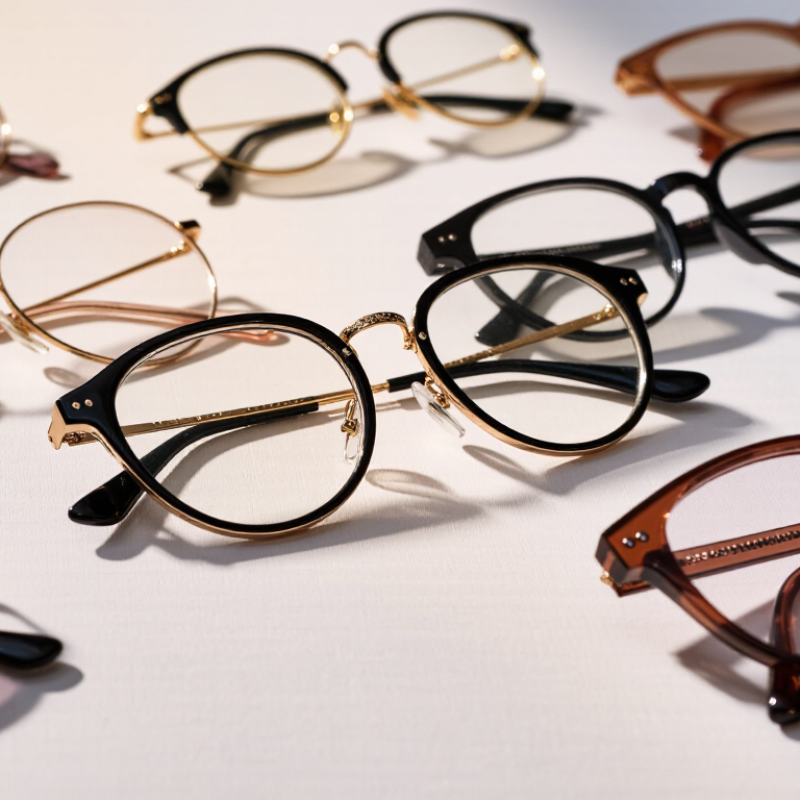
A round lens begins as a circular blank, but its nominal diameter is only a starting point. The finished shape needs enough material for edging, bevel placement, and any off-center mounting. Measure the frame’s effective diameter, then allow a practical margin for decentration and processing. A blank that barely covers the outline leaves little room for correction. Small errors matter.
For round frames, symmetry makes the geometric center easy to identify; it does not automatically locate the wearer’s optical center. Use monocular pupillary distances and fitting height to position each lens, then verify the marked centers with a lensmeter. This is especially important when prescription power creates unwanted prism away from the intended reference point. ISO 13666:2019 provides standardized ophthalmic-lens terminology, while ISO 21987:2017 addresses mounted spectacle lenses. These references help teams describe measurements consistently, but they cannot replace careful frame-specific checks.
The human need is substantial: the World Health Organization’s World Report on Vision (2019) estimates that at least 2.2 billion people have near or distance vision impairment, with at least 1 billion cases preventable or unaddressed. That scale makes repeatable fitting work consequential. I still treat a centered-looking round lens as a prompt to measure, not proof that it is correctly positioned. A neat circle can hide a poor optical match.

Round lenses offer a simple, familiar outline, but their geometry affects more than appearance. ISO 8980-1 sets optical requirements and tolerances for finished uncut spectacle lenses. It does not prescribe a round shape or guarantee a lens will fit a particular frame. That distinction matters.
During edging, the frame’s shape determines how much lens material is removed and where the lens sits. A round blank can give manufacturers flexibility when cutting different frame shapes. Yet optical centers must still align with the wearer’s measurements. If a lens is decentered, the wearer may experience unwanted prismatic effects. Power should be checked at the specified reference points, not inferred from the lens outline. Small errors count.
A practical check is to compare lens power and alignment before and after edging, especially when the frame has a narrow rim or unusual bridge placement. Keep the lens orientation marked during handling; roundness can make rotation harder to notice. This step is easy to overlook. ISO compliance supports consistent optical performance, while accurate measurements and careful fitting address the frame-specific details the standard cannot resolve.
For a round-lens product line, material choice changes more than the specification sheet. CR-39, with a refractive index near 1.50, offers clear optics and familiar processing. In modest prescriptions, it can be a practical, cost-conscious option. The lens edge still matters. A small round frame may conceal edge thickness better than a large one, but prescription power and lens design remain decisive.
Polycarbonate sits near n≈1.59 and is valued for its low weight and impact resistance. It may allow thinner profiles than CR-39 for comparable prescriptions; actual results depend on power, frame diameter, and design. That distinction can matter for children’s eyewear, active use, or lightweight everyday frames. There is a trade-off: polycarbonate can show more color fringing away from the center, so set expectations clearly.
Round shapes make sizing especially visible. Check the frame’s effective diameter, then review the prescription before promising a slim edge. CR-39 may suit customers prioritizing clear, economical optics; polycarbonate may fit impact-conscious, lightweight needs. Neither choice wins every time. Coatings and edging quality also matter, and a rushed recommendation can overlook those details.
Round lenses can simplify a product’s visual language, but their circular outline does not simplify quality control. Blank diameter must cover the finished shape, decentration, and edging allowance. A few millimeters matter. Too little material can leave an incomplete edge; excess stock adds avoidable grinding time. The World Health Organization’s World Report on Vision (2019) estimates that at least 2.2 billion people have near or distance vision impairment. That figure signals broad need, not a guarantee of demand for any one lens design.
Check edge thickness against the prescription, lens material, base curve, and frame dimensions. Measure at more than one point around the rim: a thick spot can affect fit, weight, and appearance. A neat circle can still be a poor lens. Record blank diameter and finished dimensions by batch, then compare samples under consistent lighting. Sampling is useful, but it can miss a flaw between inspected pieces.
Optical checks should cover sphere, cylinder, axis, prism, centration, and visible surface defects. ISO 8980-1 specifies requirements for uncut finished spectacle lenses, while ISO 8980-2 covers transmittance properties. Use calibrated instruments and retain traceable results. A clear-looking lens is not proof of accurate power. Nor does one passing sample prove a stable process; inspection frequency may need adjustment when materials or tooling change.
Round lenses are a useful design choice, but shape alone does not prove quality. A consistent product line needs clear checks for optical performance, material safety, and physical integrity. ISO 14889:2013 sets fundamental requirements for uncut finished spectacle lenses. It provides a baseline for evaluating lenses before they are fitted into frames. Product teams should also check applicable ISO 8980 requirements for lens type and properties.
Look closely. Under controlled lighting, inspect each lens for visible defects, then verify optical measurements using calibrated equipment. Keep records of test conditions, samples, and results; a neat inspection sheet cannot replace a reliable test.
The World Health Organization’s World Report on Vision estimates that at least 2.2 billion people have near or distance vision impairment, with at least 1 billion cases preventable or unaddressed. That scale makes dependable optical products important, though it does not make any single lens design suitable for everyone.
Round lenses can simplify certain frame and stock arrangements, but dimensional fit still matters. Confirm that edging and mounting do not compromise the lens or its required performance. ISO conformity should be supported by documented testing against the standard’s applicable requirements, not by shape or appearance. Even careful processes can miss defects, so review failed samples and revise inspection steps when needed.
Source: ISO 14889:2013; WHO, World Report on Vision, 2019.