Choosing round eyewear is about more than a vintage look. Lens shape, frame fit, prescription, and daily habits all affect comfort and clear vision. The World Health Organization’s World Report on Vision estimates that at least 2.2 billion people worldwide have near or distance vision impairment. That figure is a reminder: style matters, but practical vision needs matter more.
This guide to the 10 Best Round Lenses for Eyeglasses in 2026 compares options through details shoppers can assess: lens material, width, bridge fit, weight, and compatibility with their prescription. The Vision Council’s Consumer inSights research tracks how people in the United States use and shop for vision correction. It offers useful consumer context, though it cannot tell you which frame will fit your face. Fit is personal.
Round Lenses can soften angular features, but they do not flatter everyone. And that is fine. A small frame may feel balanced on one face and cramped on another. Before buying, check measurements against a pair you already wear comfortably, and confirm prescription limits with an eye-care professional. Screen glare, lens thickness, and frame durability deserve attention too. Some product listings make these details easy to miss. This roundup aims to make comparisons clearer, not to promise a perfect match; the best choice still depends on your prescription, fit, and everyday routine.
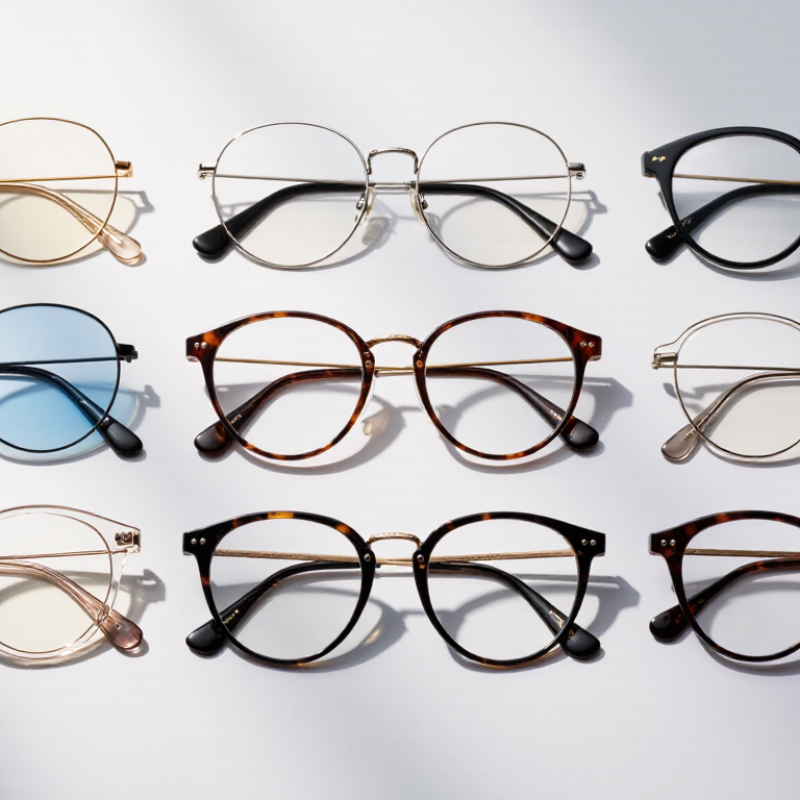
Round eyeglass lenses are not all identical circles. Some are nearly circular, while others look slightly oval or softly squared. That small change affects how much of the eye area the lens covers and how the frame sits on the face. A narrow lens can feel light and understated; a taller one may offer more viewing area but can look prominent.
Size is more than lens width. Compare the lens width, bridge width, and temple length together, then check how the frame rests on your nose and ears. Fit is personal. If the bridge slides down or the temples press behind your ears, the frame may need adjustment or a different size. The distance between your pupils also matters: an optical professional can check whether the lenses are centered appropriately for your prescription. A mirror helps, but it cannot confirm that alignment.
Prescription strength can influence lens thickness, especially near the outer edges of a round lens. Smaller frames may reduce visible edge thickness for some prescriptions, though lens material and design also matter. Round lenses can soften angular features, but that is not a rule; proportion and personal taste count more than face-shape charts suggest. Measurements are useful, yet they do not capture how a frame feels after a full day. I would treat online sizing as a starting point, not a guarantee.

Choosing round lenses starts with your prescription, not the shape alone. The Vision Council’s 2024 Consumer inSights research found that about 76% of U.S. adults use some form of vision correction. That broad figure is a reminder that lens needs vary widely. Ask an optician to check your prescription, pupillary distance, and how the frame sits on your face. Small measurements matter.
For stronger prescriptions, a smaller round lens can help limit edge thickness in minus lenses. High-index materials may make lenses thinner, but they can cost more and sometimes show more color fringing. Thinnest is not always best. Compare material, weight, and optical clarity with your optician. For everyday wear, consider scratch-resistant coating and UV protection; ask what the coating actually covers, since “protective” can mean different things.
Lens diameter also affects fit and appearance. A large round lens may feel spacious, yet it can add weight or expose more lens edge. Check the frame in natural light and look straight ahead through the optical center. A rule of thumb can mislead, especially with complex prescriptions. I would not choose from a product photo alone; real fit is less tidy than it looks online.
Round frames can make lens selection feel simple, but their size and shape affect comfort and thickness. A larger lens blank may leave strong prescriptions looking thicker at the edges. High-index materials can reduce visible thickness, while standard plastic may suit lighter prescriptions. Polycarbonate and Trivex are lighter options; an optician can help compare impact resistance, clarity, and fit. No material is perfect.
Tips: Bring your current prescription and ask about your pupillary distance. Check how the lenses sit inside the frame before ordering. Small details matter.
Coatings solve different problems. An anti-reflective coating can reduce glare from screens or headlights, while a scratch-resistant layer helps protect the surface. It does not make lenses scratch-proof. Ask whether UV protection is included, rather than assuming every clear lens blocks ultraviolet light. For strong prescriptions, confirm that the selected frame size and lens design work together. A thinner lens may still show edge thickness, and coating benefits can vary with care. I would not choose by appearance alone; comfort after a full day is easy to overlook.
Round eyeglass frames pair with many lens options, but the right choice depends on prescription, daily habits, and comfort. Standard plastic lenses suit lighter prescriptions and everyday wear. Polycarbonate lenses are lightweight and impact-resistant. Trivex lenses offer another light option with clear optics. High-index 1.67 lenses can reduce thickness for stronger prescriptions. High-index 1.74 lenses may be thinner still, though they can cost more. Fit still matters.
Photochromic lenses darken outdoors and return clearer indoors, though the change may be limited inside some vehicles. Polarized sun lenses cut reflected glare, useful near water or on bright roads. Blue-light filtering lenses appeal to screen users, but evidence for easing digital eye strain remains mixed. Anti-reflective coating reduces lens reflections, especially under indoor lights. Scratch-resistant coating helps protect surfaces, but no lens is scratch-proof. These last two are coatings, not lens materials. Thinness is not everything.
Tips: Ask an optician to compare thickness at your prescription and frame size. Check how the lenses feel during a real fitting. I sometimes overvalue a sleek edge; all-day comfort deserves equal attention.
Typical refractive index by lens material. Higher-index materials can make lenses thinner for the same prescription, but actual thickness also depends on prescription, frame size, and lens design.
Values are typical material indices and may vary by formulation. Consider impact resistance and optical clarity as well as index when choosing lenses for round frames.
Round lenses can balance angular features, but face shape alone is not a reliable fitting rule. Compare the lens width with your cheekbones, and check that the frame does not press at your temples. Small details matter. A round shape may feel oversized on a narrow face, while a small lens can look cramped on a broader one. Your prescription also affects the choice: stronger prescriptions may need careful lens sizing to manage edge thickness. Ask an optician to check the fit, optical measurements, and lens options before ordering.
Tips: Try frames in natural light and look straight ahead, then turn your head. Check that your pupils sit near the lens centers and that the frame stays put when you smile. Bring your current prescription details.
Match lens features to your routine, not just your mirror. For screen work, discuss an appropriate prescription and comfortable viewing distance; coatings are optional and should suit your actual use. If you drive at night, ask how lens reflections or tints may affect visibility. For outdoor wear, consider UV protection and whether prescription sunglasses would be useful. Comfort is personal, and I would not assume one shape works for every day. Walk around in the frames for a few minutes; a slight pinch can become distracting by evening.
| Option | Lens type or feature | Best suited to | Round-frame and face-fit guidance | Everyday considerations |
|---|---|---|---|---|
| 1 | CR-39 plastic, single vision | Low-to-moderate prescriptions and straightforward distance or reading correction | A versatile choice for many round frame sizes. Check that the lens fits the frame’s shape and your prescription range. | Offers good optical clarity and is relatively light, but can be thicker than high-index options at stronger prescriptions. |
| 2 | Polycarbonate, single vision | Children, active wearers, and people who prioritize impact resistance | Useful in smaller round frames; have the optical center and fit measured correctly for your eyes. | Impact resistant and lightweight. Its lower Abbe value than CR-39 may make color fringes more noticeable to some wearers. |
| 3 | Trivex, single vision | Active wearers seeking impact resistance with clear optics | Can work well in round frames, including lighter designs; confirm availability and prescription suitability with an optician. | Lightweight and impact resistant, with good optical clarity. Material availability and cost vary by prescription and provider. |
| 4 | 1.60 high-index plastic | Moderate prescriptions where a thinner lens profile is desired | A smaller round lens can help limit edge thickness for some prescriptions; frame size and lens shape still matter. | Often thinner than standard plastic for the same prescription. The actual result depends on prescription, lens design, and frame dimensions. |
| 5 | 1.67 high-index plastic | Stronger prescriptions where reducing lens thickness is a priority | Consider a compact round frame that centers well on your face; ask for a thickness estimate before ordering. | Can be thinner than lower-index materials for many stronger prescriptions. It may cost more, and anti-reflective coating is often helpful. |
| 6 | Aspheric lens design | Wearers seeking a flatter lens profile, especially with some stronger prescriptions | Can reduce the bulging appearance of some lenses in round frames. The benefit depends on prescription and lens positioning. | Aspheric describes lens shape, not material. Accurate measurements and fitting are important for clear, comfortable vision. |
| 7 | Progressive lenses | People who need distance, intermediate, and near correction in one pair | Choose a round frame with enough usable vertical lens depth for the prescribed progressive design and fitting measurements. | Provides multiple viewing zones without a visible segment line. Some wearers need an adjustment period; fitting and frame stability matter. |
| 8 | Photochromic lenses | Wearers who move between indoor settings and daylight | Available for many round frame styles. Confirm that the selected lens fits the frame and meets your prescription needs. | Darkens in response to UV and other light conditions, depending on the product. Performance in a car may differ because windshields block much UV. |
| 9 | Polarized lenses | Driving, fishing, and outdoor activities with reflected glare | Suitable for round sunglasses or prescription sun lenses; choose a frame that provides comfortable coverage. | Reduces glare from reflective surfaces. It can make some phone, dashboard, or instrument displays harder to see. |
| 10 | Anti-reflective coating on prescription lenses | Night driving, screen use, and people bothered by reflections | Works with many round-frame lens materials and designs; coating is an add-on rather than a lens shape or prescription. | Reduces reflections from lens surfaces. It does not replace UV protection unless the lens has appropriate UV protection specified. |
Fit tip: Round lenses do not suit a face shape simply because they are round. Compare frame width with your face, check bridge comfort and pupil alignment, and consider contrasting shapes—such as a slightly angular frame for a round face—if you want more definition. Lens material and design should be selected according to your prescription and daily needs.