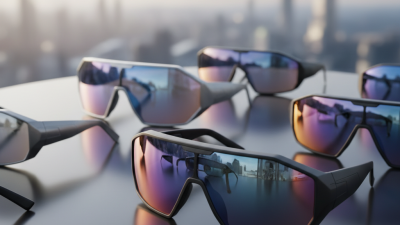
Choosing the best Polycarbonate Lenses in 2026 requires more than comparing prices or thickness charts. Global buyers face different climates, prescriptions, wearing habits, and supply conditions. A lens that performs well in a humid Singapore workshop may need different coatings for a dry European commute.
Optical educator Dr. Gary Heiting, OD, offers a useful principle: “Lens material should be chosen for the wearer’s needs, not marketing alone.” That view guides this article. Polycarbonate Lenses remain popular because they are lightweight, impact resistant, and naturally block most ultraviolet radiation. These advantages matter for children’s eyewear, sports frames, industrial safety glasses, and active daily use.
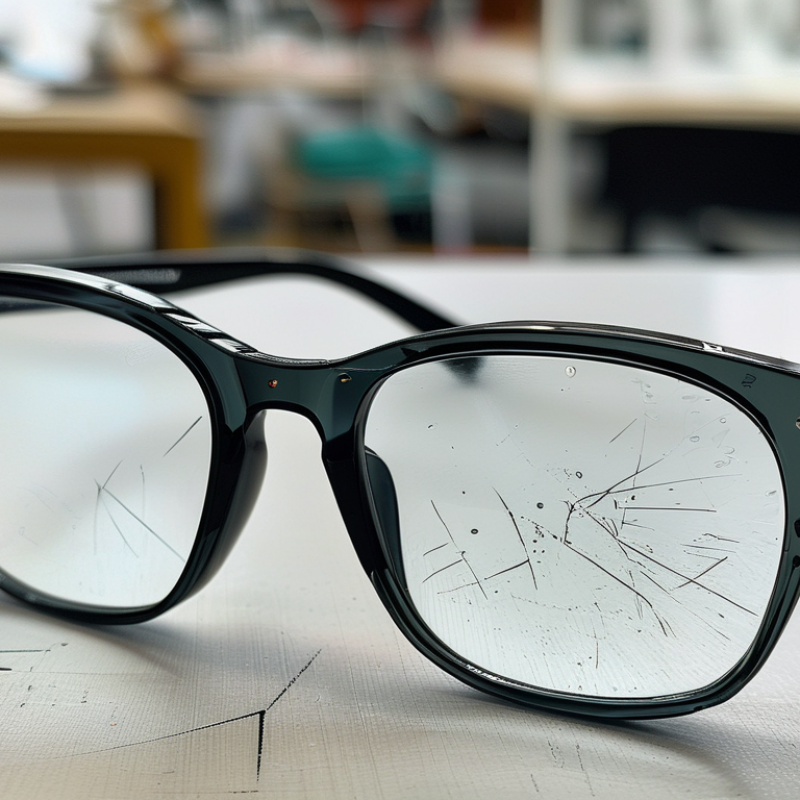
Still, polycarbonate is not perfect. Its relatively low Abbe value can create noticeable color fringes, especially in stronger prescriptions. Surface scratches may also appear quickly without a dependable hard coating. Some buyers overlook this detail. They should not.
This guide compares leading 2026 options through practical criteria. We examine optical clarity, impact performance, UV protection, coating durability, prescription range, frame compatibility, and international purchasing reliability. We also consider documentation, packaging quality, and after-sales support. These details can affect the final result more than a low factory quote.
Expect a balanced review, not a universal winner. A budget lens may suit a basic prescription, while a premium coated lens may offer better long-term value. Testing conditions also vary between suppliers. That limitation deserves attention. The final choice should match the wearer, application, and verified product specifications.
Polycarbonate lenses are lightweight optical lenses made from a strong thermoplastic material. Their refractive index is about 1.586, so they can provide thinner designs than standard plastic lenses. Light bends as it passes through the lens surface. The prescription then redirects that light toward the retina, creating a clearer image.
Polycarbonate naturally absorbs most ultraviolet radiation and resists sudden impact better than many conventional lens materials. This matters for children, active users, and workers exposed to flying particles. The World Health Organization’s World report on vision estimates that at least 2.2 billion people have near or distance vision impairment worldwide. Clear, durable eyewear remains practical, not decorative. Still, polycarbonate has a lower Abbe value, which may create color fringes near the lens edges. Some users notice this, especially with stronger prescriptions. That limitation deserves honest attention.
Tips: Ask for an impact-tested lens and confirm its ultraviolet protection. Check the optical center carefully; poor fitting can reduce comfort. An anti-reflective coating may improve night driving, but coatings can scratch without proper care. Use clean water and a soft lens cloth. Avoid paper towels. Insist on prescription verification from a qualified optical professional. Even excellent material cannot correct an inaccurate measurement.
Polycarbonate lenses remain a practical choice for global buyers in 2026, especially where impact resistance matters. They are lightweight, naturally block most ultraviolet radiation, and suit active users, children, and safety-focused applications. Their lower weight can make thick prescriptions more comfortable during long workdays. In a fitting room, the difference is noticeable after several hours of wear.
However, polycarbonate is not optically perfect. Its lower Abbe value may create color fringes near the lens edges, particularly in stronger prescriptions. Some wearers notice this when reading small text or looking sideways. The material also scratches more easily than many people expect, so a dependable hard coating is important. It can still fail under poor handling. That detail is often overlooked.
Global purchasers should request verified impact-test information, UV performance data, coating details, and prescription-use guidance. Manufacturing quality affects clarity, edge finishing, and coating durability. Buyers should also check whether the lens design fits the frame shape and the user’s daily environment. A wide frame may increase edge distortion. A careless fitting can reduce the benefits of a good material.
Polycarbonate can show surface reflections and slight visual softness. Not every wearer accepts that trade-off.
Testing a sample under office lighting, bright sunlight, and evening conditions may reveal problems before a large order. Some specifications look convincing on paper but feel disappointing in use. That is worth questioning.
2026 Best Polycarbonate Lenses for Global Buyers?
How to Compare Polycarbonate Lens Types and Coatings
Polycarbonate lenses remain practical for children, sports eyewear, and industrial safety applications. They offer high impact resistance and block nearly all UV radiation below 380 nanometers, according to technical performance data aligned with ANSI Z87.1 requirements. Their lower density also reduces weight compared with many glass options.
The compromise is optical clarity. Polycarbonate has an Abbe value near 30, which can create noticeable color fringing at lens edges. High-index materials may be thinner, but they can need stronger coatings and careful fitting. Compare lens thickness, prescription range, edge distortion, and impact certification together. ISO 8980-1 provides useful benchmarks for spectacle-lens optical performance and coating durability. The World Health Organization’s World report on vision estimates that at least 2.2 billion people have near or distance vision impairment. That scale makes consistent quality control important across global supply chains.
Tips: Request coating test results, not marketing claims. Choose hard coatings for scratch resistance, hydrophobic layers for easier cleaning, and anti-reflective treatments for night driving. Check whether the coating works with the frame’s drilling or mounting method. Ask for UV and impact documentation. Small details matter.
A perfect lens does not exist. Polycarbonate can show more chromatic blur than expected, especially in strong prescriptions. I have seen buyers focus on price, then overlook fitting accuracy and coating maintenance. That decision often creates avoidable complaints. Compare the complete lens system, not only the material name.
| Category | Option | Typical Technical Data | Main Advantages | Limitations | Buyer Checks |
|---|---|---|---|---|---|
| Polycarbonate Lens Types and Performance | |||||
| Lens material | Standard ophthalmic polycarbonate |
Refractive index: approximately 1.586 Density: approximately 1.20 g/cm³ Abbe value: approximately 30 Base UV protection: generally absorbs UV up to about 380 nm |
Very high impact resistance, low density, thin center and edge profiles compared with standard plastic lenses, and built-in UV absorption. | Lower Abbe value can produce more noticeable chromatic aberration, especially in high prescriptions or when the wearer looks away from the optical center. | Request material data, optical tolerances, UV transmission results, and impact-test documentation. |
| Lens design | Single-vision polycarbonate | One optical power across the lens; available for distance, intermediate, or near vision. Commonly produced in spherical, aspherical, or atoric designs. | Straightforward production, broad prescription coverage, and suitable for prescription safety eyewear, children's eyewear, sports eyewear, and everyday use. | Optical performance depends strongly on centration, lens geometry, prescription range, and surface quality. | Confirm power range, cylinder limits, pupillary-distance tolerance, and minimum fitting height. |
| Lens design | Progressive polycarbonate | Distance, intermediate, and near zones blended into one lens; corridor design and fitting parameters vary by production method. | Provides multiple focal zones while retaining polycarbonate's impact resistance and low weight. | More sensitive to fitting height, monocular pupillary distance, pantoscopic angle, and frame wrap than single-vision lenses. | Verify corridor length, fitting cross position, design marking process, and tolerance policy for remakes. |
| Lens design | Aspheric or atoric polycarbonate | Curvature is optimized across one or more meridians to reduce front-surface bulge and improve edge appearance. | Can provide a flatter appearance, improved cosmetic profile, and better off-axis performance than a basic spherical design. | May require more accurate edging and fitting; benefits depend on prescription, frame shape, and lens design quality. | Ask for design maps, corridor or optimization data, and acceptable tolerance ranges. |
| Lens format | Finished stock lens | Pre-produced power and diameter; typically supplied in common prescriptions and standard diameters. | Faster delivery, simpler inventory planning, and lower processing requirements for high-volume orders. | Limited prescription, diameter, tint, and design flexibility; higher risk of inventory imbalance. | Compare stock range, diameter options, packaging, shelf-life guidance, and order minimums. |
| Lens format | Semi-finished blank | Front surface is formed while the back surface is processed to the required prescription by the laboratory or finishing facility. | Supports a wider prescription range, customized designs, and local edging or surfacing workflows. | Requires compatible surfacing equipment, process control, and trained technicians. | Confirm blank diameter, front-base curve, center thickness, surfacing allowance, and processing compatibility. |
| Impact performance | Safety-oriented polycarbonate | Intended for applications where impact resistance is a priority. Performance must be verified against the applicable regional standard and test configuration. | Appropriate for workplace protection, sports use, children's eyewear, and high-activity environments when correctly designed and fitted. | A polycarbonate material alone does not guarantee certified safety performance; the complete lens, frame, and configuration must be tested. | Request the applicable conformity declaration, test method, impact class, and marking requirements for the destination market. |
| Polycarbonate Lens Coatings | |||||
| Surface coating | Hard coat | A scratch-resistant polymer coating applied to one or both surfaces. It improves surface durability but is not scratch-proof. | Essential for reducing abrasion, improving cleaning durability, and supporting the service life of relatively soft polycarbonate surfaces. | Coating quality, adhesion, hardness, and curing uniformity vary by process; improper cleaning can still cause damage. | Check abrasion-test method, adhesion testing, coating thickness range, and care instructions. |
| Surface coating | Anti-reflective coating | Multilayer optical coating designed to reduce front- and back-surface reflections across a selected visible-light range. | Improves cosmetic clarity, reduces glare from lamps and screens, and can increase light transmission through the lens. | More expensive than hard coat alone; poor adhesion, contamination, or thermal stress may cause peeling or surface cracking. | Compare residual reflectance, wavelength range, layer durability, cleaning resistance, and warranty terms. |
| Surface coating | Hydrophobic and oleophobic top coat | Water- and oil-repellent top layer usually applied over an anti-reflective stack. | Helps reduce water spots, fingerprints, dust adhesion, and cleaning effort. | Top-coat performance gradually decreases with abrasion, heat exposure, and unsuitable cleaning products. | Request contact-angle data, wipe-cycle results, recommended cleaners, and service-life expectations. |
| Surface coating | UV-enhancing or UV-blocking treatment | Additional treatment intended to reduce transmission in specified ultraviolet bands. Polycarbonate already provides substantial inherent UV absorption. | Can support product positioning where extended UV-performance claims are required, provided the final lens is tested. | Marketing terms such as “blue light” or “UV protection” may describe different wavelength ranges and should not be treated as equivalent. | Require a wavelength-by-wavelength transmission curve and define the claimed UV range before purchase. |
| Appearance treatment | Tinted or polarized finish | Solid, gradient, mirrored, or polarized treatment can be added depending on the lens construction and intended application. | Supports glare reduction, visual comfort, fashion applications, and outdoor-use products. | Tint uniformity, color stability, polarization efficiency, and compatibility with prescription processing must be controlled. | Specify tint density, color coordinates, polarization efficiency, fade resistance, and sample approval requirements. |
| Coating package | Recommended general-purpose package | Polycarbonate substrate + two-sided hard coat + durable anti-reflective coating + hydrophobic and oleophobic top coat. | Provides a balanced combination of impact resistance, scratch resistance, optical clarity, easier cleaning, and everyday durability. | Higher unit cost than an uncoated or hard-coat-only lens; coating defects can affect yield and customer returns. | Compare total delivered cost, defect rate, warranty coverage, inspection criteria, and batch consistency. |
| Global Purchasing and Quality-Control Dimensions | |||||
| Optical quality | Prescription accuracy and tolerances | Verify sphere, cylinder, axis, addition, prism, optical center, and thickness against the applicable optical standard and purchase specification. | Reduces dispensing errors, remakes, adaptation complaints, and market-specific compliance risks. | Tolerances and labeling requirements may differ between destination markets. | Define inspection sampling, test equipment, calibration records, and acceptable quality limits before production. |
| Environmental durability | Heat, humidity, and chemical resistance | Performance depends on substrate, coating stack, curing process, packaging, and exposure conditions during transport and use. | Important for tropical climates, coastal regions, warehouse storage, and long-distance shipping. | Extreme heat, humidity, solvents, and poor packaging can accelerate coating failure or lens deformation. | Review accelerated-aging results, storage limits, packaging design, and approved cleaning chemicals. |
| Traceability | Batch and production records | Records should connect raw material, coating batch, production date, inspection results, and shipping lot. | Supports recall management, root-cause analysis, repeat-order consistency, and regulatory documentation. | Traceability is difficult when multiple coating or surfacing stages are outsourced without documented controls. | Request lot identification, certificates of analysis, inspection reports, and retention-sample procedures. |
| Commercial evaluation | Total cost of ownership | Consider lens price, coating yield, freight, duties, inspection, breakage, remakes, warranty claims, and inventory carrying costs. | Provides a more reliable comparison than unit price alone. | The lowest quoted price may result in higher defect rates, shorter service life, or more customer returns. | Compare landed cost per accepted lens and request a representative production sample before volume orders. |

Polycarbonate lenses are a practical choice for global buyers seeking safety, UV protection, and clear vision. Their low weight improves comfort during long workdays. Their impact resistance can reduce injury risks from flying particles. However, “impact resistant” should never be accepted without test evidence.
UV protection deserves careful checking. Look for documented blocking against UVA and UVB radiation, not only a dark lens color. A darker tint can feel comfortable while offering weak protection. Buyers should request transmission data, test reports, and the product’s intended use. UV400 claims are useful, but independent verification is more reliable. Small details matter.
Optical performance also affects real safety. Poor lenses may create distortion, glare, or eye fatigue near the edges. Inspect samples under bright indoor lighting and during outdoor movement. Check the optical class, surface quality, and scratch resistance. Safety eyewear may reference standards such as ANSI Z87.1 or EN 166, while sunglasses may follow different regional requirements. Requirements vary by market. Confirm current rules before purchase.
In practical evaluations, the best lens is not always the thickest or darkest. Fit, ventilation, coating durability, and frame stability influence daily protection. A lens may pass laboratory testing yet perform poorly after careless storage. I would also question test reports with unclear laboratories or missing dates. Polycarbonate is strong, but it is not unbreakable. Reliable buying requires evidence, realistic use testing, and a willingness to reconsider attractive claims.
Safety, UV Protection, and Optical Performance Standards
The shortest ultraviolet band. Polycarbonate naturally absorbs this range, but finished-lens performance should still be verified by laboratory testing.
A higher-energy UV band associated with sun exposure. Global buyers should request spectral-transmittance results for the finished lens.
A 400 nm protection claim indicates coverage across the commonly defined UV range. Confirm the tested cutoff and applicable regional requirements.
The wavelength bands follow ISO 21348 definitions. For procurement, also review spectral transmittance under ISO 8980-3, optical quality under ISO 8980-1, and impact requirements under the applicable regional safety standard, such as ANSI/ISEA Z87.1, EN ISO 16321-1, or AS/NZS 1337.1. The chart shows reference bands and a 400 nm buyer target, not a certification result for a specific product.
For global buyers, reliable polycarbonate lenses begin with verified performance, not attractive pricing. The WHO World Report on Vision estimates that at least 2.2 billion people have near or distance vision impairment. This demand makes consistent lens quality essential. Polycarbonate offers high impact resistance and a light 1.59 refractive index. It suits children, active users, and safety-focused applications.
Check compliance documents before ordering. ISO 8980-5 covers the impact resistance of finished spectacle lenses. Ask suppliers for recent laboratory reports, batch traceability, and coating test results. UV protection should be clearly specified, rather than described as “premium.” In humid shipping conditions, examine anti-reflective coating adhesion and edge finishing. Small defects can become visible after temperature changes.
Do not judge quality by index alone. Polycarbonate has a relatively low Abbe value, around 30, so some wearers may notice color fringing near the lens edges. Accurate centration and suitable frame dimensions can reduce this problem. I would also request samples before committing to large volumes. A lens that passes one impact test may still show weak coating durability. The Global Eyewear Market report by Grand View Research projected strong market growth through 2030, but fast expansion can increase supplier variation. Buyers should compare independent tests, production experience, and complaint records—not only catalog specifications.