What are the Benefits of Polycarbonate Lenses for Buyers?
Polycarbonate lenses have gained popularity in eyewear due to their unique benefits. Dr. Emily Carter, an ophthalmology expert, states, "Polycarbonate lenses provide unmatched durability and protection." This emphasizes their significance in both prescription eyewear and sunglasses.
These lenses are lightweight yet strong, making them ideal for active lifestyles. Their resistance to impact enhances safety, particularly for children and those in high-risk professions. Additionally, the built-in UV protection safeguards eyes from harmful rays. Such features ensure comfort and peace of mind.
However, it is important to consider potential downsides. Some users report scratch resistance issues compared to glass lenses. This might lead to reflections impacting clarity. Buyers should weigh these factors carefully while deciding on polycarbonate lenses as their preferred choice for vision correction.
Understanding Polycarbonate Lenses: An Overview for Buyers
Polycarbonate lenses have gained popularity due to their numerous benefits. These lenses are made from a durable thermoplastic material. This makes them significantly more impact-resistant than traditional glass or plastic lenses. According to industry statistics, polycarbonate lenses can withstand up to 10 times more force than standard lenses. This feature is particularly vital for active lifestyles and environments where lens breakage is a concern.
In addition to their strength, polycarbonate lenses are lightweight. Weighing about 40% less than glass lenses, they offer comfort for extended wear. This is especially important for children and individuals requiring prescription eyewear. Furthermore, these lenses provide built-in UV protection. Research indicates that polycarbonate lenses block 100% of harmful UV rays. Such protection can significantly reduce the risk of eye damage over time.
Despite these advantages, it's essential to acknowledge some limitations. While polycarbonate lenses are scratch-resistant, they can still acquire scratches over time. Regular maintenance and proper care are necessary to prolong their lifespan. Additionally, the optical clarity of polycarbonate may not match that of high-index lenses. Buyers should weigh these factors against their specific needs before making a decision.
Lightweight Nature of Polycarbonate Lenses and User Comfort
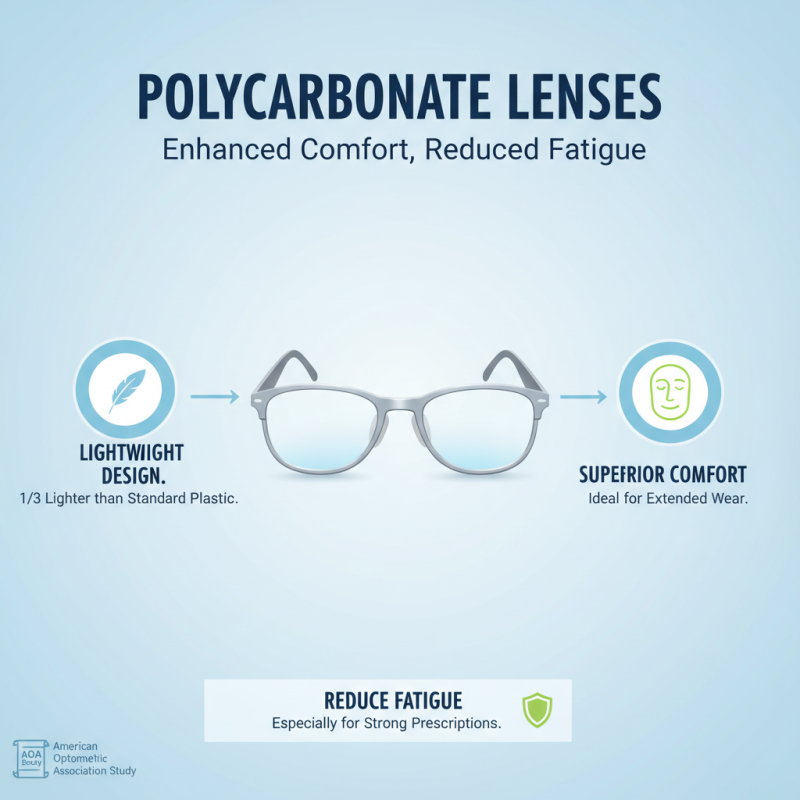
Polycarbonate lenses are gaining popularity for their lightweight nature, making them appealing to many buyers. Weighing about a third less than standard plastic lenses, polycarbonate options provide comfort for extended wear. A study from the American Optometric Association shows that lighter lenses help reduce fatigue, particularly for those who require correction. Users often report less discomfort, especially those with strong prescriptions.
In addition to being lighter, polycarbonate lenses offer notable durability. They are more impact-resistant compared to traditional lenses, making them a safer choice for active individuals. According to a report from the Vision Council, nearly 50% of users reported a heightened sense of security when wearing polycarbonate lenses. This is crucial for people engaged in sports or occupational settings where safety is paramount.
Despite these advantages, some users may notice a difference in optical clarity. Polycarbonate lenses can sometimes cause slight distortion, particularly in higher prescriptions. This variability can affect user experience and comfort. Careful consideration is necessary to determine if the benefits outweigh any potential downsides. Always consult with a vision specialist to identify the best solution tailored to individual needs.
Impact Resistance: Safety Benefits of Choosing Polycarbonate Lenses
Polycarbonate lenses offer significant safety benefits due to their remarkable impact resistance. These lenses are made from a durable material that can withstand strong forces.
Unlike traditional glass or plastic lenses, polycarbonate lenses are less likely to shatter on impact. This makes them an ideal choice for active individuals or those in challenging work environments.
In daily life, accidents can happen unexpectedly. Whether it's a sports mishap or an unfortunate drop, polycarbonate lenses are designed to provide a layer of protection. They are lightweight and thin, which adds comfort without compromising on safety.
However, some might overlook the need for proper care. Scratches can diminish their effectiveness, so regular maintenance is crucial.
Moreover, while these lenses are resistant to impacts, they are not indestructible. Buyers should understand their limitations. Investing in polycarbonate lenses is wise for those seeking safety and convenience, but awareness of their vulnerabilities is also important.
Balancing the benefits with an understanding of care ensures long-lasting performance.
UV Protection Offered by Polycarbonate Lenses for Eye Health
Polycarbonate lenses provide excellent UV protection, essential for maintaining eye health. These lenses block harmful UV rays that can lead to serious eye conditions. UV rays can cause cataracts, macular degeneration, and even skin cancer around the eyes. Choosing polycarbonate lenses means safeguarding your eyes from these risks.
One of the standout features of polycarbonate lenses is their lightweight nature. Many users appreciate how comfortable they feel throughout the day. However, some might not realize that even when lenses feel light, they need to fit properly. A good fit helps improve the effectiveness of UV protection. It's important to consider both comfort and function when selecting lenses.
While polycarbonate lenses are durable, they can scratch more easily than other materials if not cared for properly. Regular cleaning and protective cases can help maintain their condition. It's a delicate balance between convenience and the need for care. This awareness can enhance your overall experience with polycarbonate lenses while ensuring that your eyes remain protected from harmful UV radiation.
Versatility of Polycarbonate Lenses in Various Eyewear Applications
Polycarbonate lenses offer remarkable versatility across various eyewear applications. These lenses are notably lightweight and highly impact-resistant. This makes them ideal for active individuals, including sports enthusiasts and children. Their durability ensures that they can withstand daily wear and tear without compromising visual clarity.
In addition to strength, polycarbonate lenses provide excellent UV protection. This feature is crucial for outdoor activities, where extended sun exposure can cause eye damage. As a result, they are often selected for sunglasses and safety eyewear. Their ability to adapt to different prescriptions also makes them a popular choice for both glasses and goggles.
Despite their advantages, polycarbonate lenses have some drawbacks. They can scratch more easily than other materials. This means users should consider additional coatings for protection. The visual distortion can be a concern for some, particularly in high prescriptions. Taking all factors into account helps buyers make informed decisions about their eyewear needs.
Benefits of Polycarbonate Lenses in Eyewear Applications