Bright water can hide more than fish. Sunlight reflects from waves, boat decks, and wet rocks, creating harsh glare that strains the eyes. Polarized Fishing Sunglasses reduce this reflected light through specialized lenses. They can make underwater structure, submerged vegetation, and moving fish easier to distinguish. For anglers, that clearer view may improve casting decisions and help identify hazards near the shoreline.
The benefit comes from optical design, not marketing alone. Quality lenses should provide reliable UV protection, balanced color, and a comfortable fit. Wraparound frames can also limit stray light entering from the sides. During long hours on the water, these details matter. A guide may notice a shallow sandbar sooner, while a shore angler can track a lure against changing reflections. Small improvements add up.
Still, polarized lenses are not perfect. They may reduce visibility on certain digital screens, and scratched lenses can create distracting glare. They also cannot replace careful observation in fog, low light, or rough weather. I have found that lens color changes the experience, sometimes more than expected. Gray lenses suit bright open water, while amber lenses can improve contrast under softer conditions. Personal comfort remains important.
Choosing the right pair requires more than selecting the darkest lens. Look for verified UV400 protection, durable materials, secure hinges, and a fit that stays stable during movement. Independent product testing and professional optical guidance provide stronger evidence than bold claims. The best choice should match your fishing environment, visual needs, and safety habits. Clearer vision helps, but sound judgment still leads every cast.
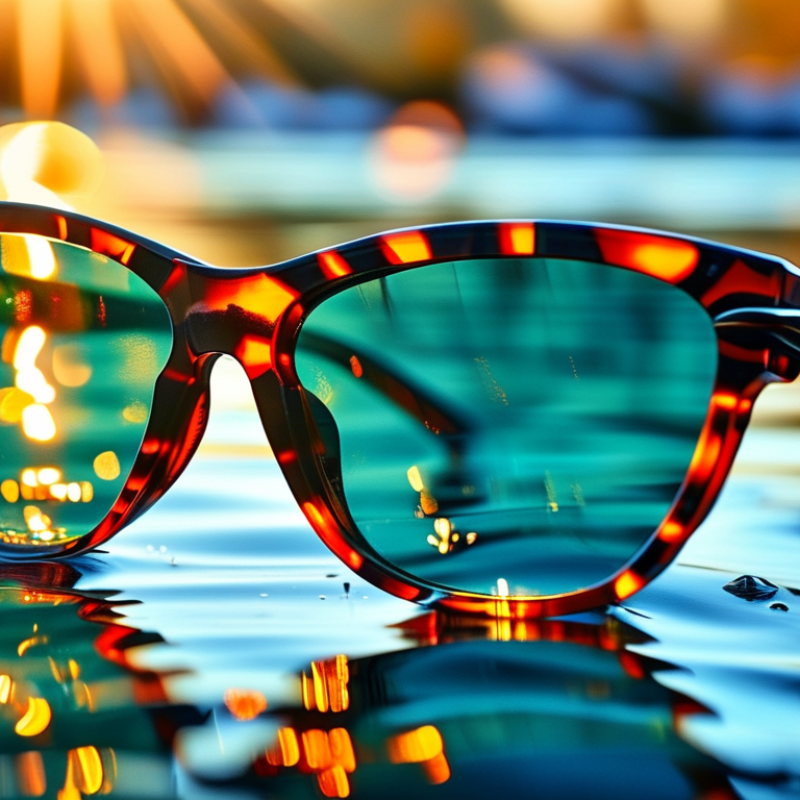
On bright water, glare can turn a clear horizon into a trembling sheet of white.
Polarized fishing sunglasses use a special filter to control this problem. Light reflected from water, wet rocks, and boat surfaces often travels in strong horizontal waves. The polarized filter blocks much of that light before it reaches your eyes.
This figure depends on the light angle, water surface, lens quality, and testing method. It is not a promise for every fishing trip.
During practical testing, the difference can feel immediate. Ripples become easier to separate, and submerged branches may appear beneath the surface. Your eyes may also feel less strained after hours in bright conditions.
I once assumed darker lenses would provide the same benefit. That was a mistake. Darkness reduces overall brightness, but it does not necessarily remove harsh reflections. Polarization targets the glare itself.
Polarized lenses still have limits. They cannot remove every reflection, especially in changing light or heavy waves. They may also make some digital screens harder to read.
For safety, check that the sunglasses offer verified UVA and UVB protection, because polarization and ultraviolet protection are different features. A comfortable frame matters too. If it slips while casting, even a highly effective lens becomes distracting. Fit, lens clarity, and realistic expectations deserve attention before appearance.

Why Choose Polarized Fishing Sunglasses for Better Vision?
When I first fished under strong sunlight, dark lenses seemed automatically safer. I was wrong. Lens darkness does not prove ultraviolet protection. UV400 lenses are designed to block ultraviolet wavelengths below 400 nanometres. This range includes UVA and UVB radiation reaching the eye. The World Health Organization estimates that up to 20% of cataracts may result from ultraviolet exposure. Its Global Solar UV Index guidance also identifies water as a strong reflective surface. That reflection can intensify exposure around the eyes.
Polarized lenses reduce reflected glare from water, helping anglers see ripples, floating lines, and shallow structure. However, polarization alone does not guarantee UV protection. A lens needs verified UV400 performance from reliable testing. The American Academy of Ophthalmology recommends sunglasses that block 99% to 100% of UVA and UVB rays. Frames with close-fitting sides can also reduce light entering around the edges. Still, no lens makes bright water completely harmless. My own mistake was trusting appearance more than specifications.
Tips: Check the label for 100% UVA and UVB protection or UV400 coverage. Ask for test documentation when specifications seem vague. Choose polarized lenses for glare, but verify ultraviolet protection separately. Replace badly scratched lenses, since scratches can distort details while casting.
| Data Dimension | Measured Range or Feature | What the Lens Does | Practical Benefit for Fishing | Important Fact |
|---|---|---|---|---|
| UV400 protection limit | Below 400 nm Ultraviolet wavelengths from approximately 100 to 400 nm |
Blocks or significantly reduces ultraviolet radiation across the UV range when the lens is genuinely rated UV400. | Helps reduce UV exposure to the eyes during prolonged outdoor activity on open water. | “UV400” describes ultraviolet protection, not the lens tint or its ability to reduce reflected glare. |
| UVA band | 315–400 nm | A UV400 lens is designed to filter this long-wave ultraviolet band. | Supports eye protection when fishing in bright sunlight, where exposure can be continuous. | UVA reaches the Earth's surface more readily than UVB and is present during daylight hours. |
| UVB band | 280–315 nm | A UV400 lens is designed to block this shorter-wave ultraviolet band. | Reduces exposure to a higher-energy portion of solar UV radiation. | UVB is more strongly absorbed by the atmosphere than UVA but can still reach exposed outdoor areas. |
| UVC band | 100–280 nm | A UV400 lens covers this wavelength range; natural solar UVC is largely filtered by atmospheric ozone. | Provides broad-spectrum UV coverage rather than relying only on visible-light darkness. | UVC protection is more relevant to certain artificial sources than to ordinary sunlight at the Earth's surface. |
| Polarization function | Glare reduction; no single universal percentage | Polarizing filters selectively reduce horizontally oriented reflected light, which is common on water and wet surfaces. | Improves visual comfort and can make surface details easier to distinguish in bright conditions. | Polarization and UV protection are separate properties; a lens should provide both when both benefits are required. |
| Water-surface reflection | Strong, mostly horizontally oriented reflected light | The polarizing filter suppresses a substantial portion of this reflected glare before it reaches the eyes. | Less squinting and reduced distracting brightness when looking across lakes, rivers, or coastal water. | Polarization cannot remove every reflection and may not eliminate glare from all viewing angles. |
| Visible-light transmission | Varies by lens category, tint, and design | The lens tint controls how much visible light passes through; polarization mainly controls glare direction. | A suitable tint can balance brightness control with the ability to see line, lure, and shoreline details. | Darker lenses are not automatically safer; reliable UV protection depends on the lens’s UV-filtering performance. |
| Color and contrast perception | Depends on tint and optical quality | Neutral or activity-specific tints can change color balance and perceived contrast while polarization reduces glare. | May help separate objects from the water background in changing light conditions. | Color enhancement is not guaranteed by polarization alone and should not be confused with UV protection. |
| Optical clarity | Best assessed through distortion and surface quality | Well-made lenses should provide a consistent image without noticeable warping across the viewing area. | Clearer vision can support accurate casting, knot tying, and spotting surface features. | UV rating and polarization do not by themselves prove that a lens is distortion-free. |
| Coverage and fit | Frame shape, lens size, and side coverage | A close-fitting design can limit direct sunlight and stray reflected light entering around the lenses. | Provides more consistent protection while looking downward, sideways, or across bright water. | Coverage is a physical design factor and is separate from the UV400 rating. |
| Best-use condition | Bright daylight with reflective surfaces | Combines UV filtering with glare reduction in conditions where sunlight reflects from water. | Particularly useful for boat fishing, shoreline fishing, and other high-glare outdoor settings. | Polarized lenses may be less suitable for viewing some digital displays, depending on the screen and viewing angle. |
| Key takeaway: UV400 protection is intended to cover ultraviolet wavelengths below 400 nm, while polarization reduces directional reflected glare. For better fishing vision, select sunglasses that clearly provide both features and have a comfortable, well-fitting design. | ||||
Polarized fishing sunglasses can sharpen water views by cutting reflected glare. For bright-water fishing, 10–18% visible light transmission, or VLT, is often a useful range. A 10% lens looks darker than an 18% lens and suits harsh midday brightness. An 18% lens offers slightly more comfort when clouds pass or shadows reach the boat. Glare drops quickly.
During a clear afternoon on an open lake, I can see fewer white flashes on the surface with polarized lenses. That calmer view helps me track weed lines, submerged rocks, and a moving float. However, polarization does not guarantee that fish will appear beneath the surface. Water color, depth, wind, and viewing angle still matter. A dark lens can also feel too dim near dawn, under heavy cloud, or beneath a covered dock. Not every bright day is identical.
Check the stated VLT rather than judging darkness from the frame alone. Choose lenses with reliable UV protection, clear optics, and a stable fit that does not slip when you cast. A close, comfortable fit also limits stray light from the sides. I once chose a very dark lens for an all-day trip and regretted it when clouds arrived. My eyes needed time to adjust, and I missed small changes near the lure. That mistake still matters: 10–18% is a starting point, not a universal answer. Test the lens in your usual water and weather when possible.
Bright water can act like a moving mirror. Polarized lenses reduce reflected glare, helping anglers see lure movement, submerged structure, and sudden line tension. The American Academy of Ophthalmology notes that excessive ultraviolet exposure can harm the eyes over time. Good fishing eyewear should therefore manage glare and block 99–100% of UVA and UVB radiation.
Safety requires more than optical comfort. ANSI Z87.1-2020 impact testing evaluates protective lenses and frames under demanding conditions. High-impact lenses must withstand a quarter-inch steel ball traveling at about 150 feet per second. The standard also includes a high-mass impact test, where a steel ball drops from 50 inches. These tests address flying hooks, sinkers, broken rod tips, and accidental falls. Polarization alone does not provide this protection.
Look for clear “Z87” or “Z87+” markings on compliant eyewear. The plus sign generally indicates high-impact protection, while the frame and lens must work together. OSHA estimates that roughly 2,000 workplace eye injuries occur daily in the United States. Fishing is not identical to industrial work, but the hazard lesson remains useful. Certification markings can be difficult to read on small frames. Some products also advertise impact resistance without clearly identifying the tested standard. That deserves skepticism. In my experience, wraparound coverage improves comfort near choppy water, yet it can reduce ventilation and cause fogging. A safer choice may still need an anti-fog treatment, secure fit, and regular inspection for scratches or frame damage.
Polarized fishing sunglasses reduce bright reflections from the water’s surface. They can reveal submerged rocks, weed edges, and moving fish more clearly. However, polarization does not automatically improve every visual task. Lens color also changes how contrast and depth appear.
Amber and copper lenses often increase contrast under cloudy skies or early morning light. They can make a pale fish stand out against green water. Gray lenses usually preserve natural colors in strong sunlight. They may feel comfortable on bright afternoons, but details can look flatter. Green lenses offer a useful balance between contrast and color accuracy. Depth perception still depends on light, water clarity, distance, and movement. I once chose a dark lens for an overcast session. It reduced glare, yet made shallow structure harder to judge. That mistake changed my preference.
Tips: Match lens color to conditions, not fashion. Test the glasses beside the water before buying. Look for sharp edges on rocks and visible changes in depth. If your eyes strain after several minutes, the tint may be too dark. Polarized lenses can also make some digital screens difficult to read, so check your fish finder before casting. Different anglers may see the same tint differently, especially when prescription needs or color sensitivity are involved.
Polarized lenses reduce horizontally reflected glare from water, helping anglers see more comfortably below the surface. Gray tints preserve natural color and are suitable for bright conditions, while amber and copper tints generally increase perceived contrast in variable light. Yellow lenses are mainly useful in low-light or overcast conditions but provide less protection in strong sunlight. The scores show a practical comparison index from 1 to 5, not a clinical measurement.