2026 Top Optical Lenses Trends for Global Buyers?
In recent years, the demand for optical lenses has surged globally. This trend is driven by advancements in technology and changing consumer needs. As we look ahead to 2026, buyers must stay informed about the latest innovations. The market for optical lenses is evolving rapidly.
New materials and designs are enhancing optical performance and durability. Buyers should consider factors beyond price, such as quality and brand reputation. Emerging markets are expanding, presenting opportunities for both buyers and manufacturers. Yet, not all optical lenses meet high standards. Some products may lack reliability or long-term performance. Therefore, conducting thorough research is vital.
The diversity of applications for optical lenses is increasing. From eyewear to advanced imaging systems, the possibilities are vast. Buyers must navigate these options carefully. Understanding trends can create advantages in selecting the right products. By being informed, buyers can ensure they choose optical lenses that meet their needs effectively. Reflecting on these trends will lead to better purchasing decisions moving forward.

Emerging Technologies in Optical Lens Manufacturing for 2026
The optical lens manufacturing industry is poised for significant transformation by 2026, thanks to emerging technologies.
Advanced materials such as high-performance polymers are gaining traction, making lenses lighter and more durable.
A report by Research and Markets notes that the global optical lens market is projected to grow at a CAGR of 5.6% from 2021 to 2026.
This growth is driven by increasing demand in sectors like eyewear and healthcare.
Another key trend is automation in production. Automation technologies enhance precision and reduce production costs.
As manufacturers implement smart technology, they face challenges in integration and workforce adaptation.
Not all companies have the expertise to shift to automated systems smoothly. This presents a gap where smaller manufacturers may struggle,
highlighting the need for industry collaboration and support.
Tip: Embracing new technologies can be overwhelming. Focus on gradual implementation rather than complete overhauls.
Sustainability is also becoming a priority. Eco-friendly materials are increasingly used in lens production processes.
Reports indicate that 70% of consumers prefer companies that demonstrate environmental responsibility.
However, the transition to sustainable practices requires investment and careful planning.
This is not without its difficulties, as some eco-friendly materials can be less efficient.
Tip: Evaluate the long-term benefits of sustainable materials against initial costs for better decision-making.
Sustainable Materials and Eco-Friendly Practices in Optical Lenses
The demand for sustainable materials in optical lenses continues to grow. Eco-friendly practices are reshaping the industry. Many manufacturers are exploring biopolymers and recycled plastics for lens production. These materials reduce carbon footprints and offer a promising alternative. Transparency in sourcing is crucial. Buyers must be aware of the materials used in their lenses.
Tips: Choose lenses made from recycled materials when possible. This supports sustainability and reduces waste.
Some companies struggle to balance cost and sustainability. Eco-friendly materials may be more expensive. However, investing in these options yields long-term benefits for the planet. Buyers should educate themselves about the processes behind lens manufacturing. Each step counts in the journey towards greater sustainability.
Tips: Research brands that prioritize eco-friendly practices. Look for certifications that highlight their commitment to the environment.
Trends in Optical Lens Designs: Customization and Personalization
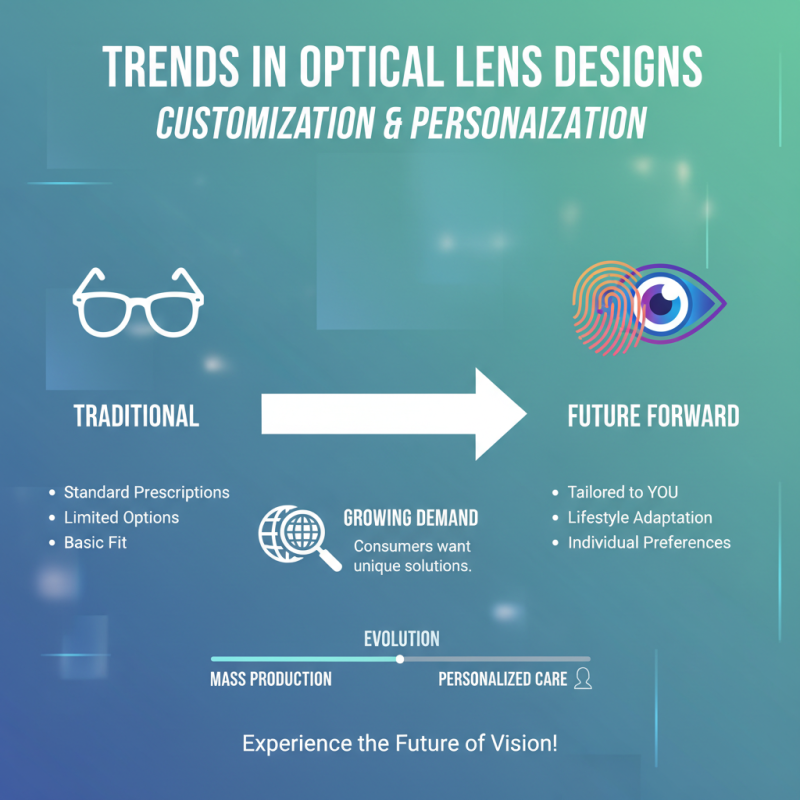
The demand for customization in optical lenses is growing rapidly. Consumers want lenses tailored to their unique needs. The future of optical lens designs will focus on personalization. This means more than just fitting; it involves adapting lenses to individual lifestyles and preferences.
Customization can enhance performance significantly. For instance, some wearers might require specific tints or coatings for outdoor activities. Others may need specialized designs for tech usage. However, not all customization options are effective for every individual. Some designs may not translate well in real-world applications, leaving users disappointed. This underscores the need for ongoing research and development in lens technology.
Moreover, personalized lenses can be more expensive. Consumers must weigh the benefits against the costs. Transparency in the production process is crucial. Many buyers are concerned about quality and reliability, especially when opting for bespoke options. The ongoing changes in consumer preferences indicate a shift toward lenses that reflect individual identities, but challenges remain. Meeting these demands requires collaboration between designers, manufacturers, and users to ensure that personalized lenses deliver on their promises.
Impact of Virtual Reality and Augmented Reality on Optical Lenses
Virtual Reality (VR) and Augmented Reality (AR) are transforming the optical lens industry. These technologies demand lenses that enhance visuals without distortion. Traditional lenses may struggle to meet these needs. Manufacturers are under pressure to innovate and create solutions that truly enhance user experience. VR and AR applications require high precision and responsiveness.
The rise of VR gaming and AR applications calls for new lens designs. Consumers look for clarity and comfort while using these technologies. Discomfort can easily lead to a poor experience. There's a growing need for lenses that minimize eye strain. Some companies are experimenting with adaptive optics. These are not yet perfected, but show promise in optimizing visual performance in various conditions.
However, challenges remain. The cost of advanced lens technology can be significant. Additionally, there are concerns about how quickly these designs can reach consumers. Without solving these issues, potential buyers may remain hesitant. The interplay between technology and consumer needs is crucial. Finding the right balance will take time and reflection.
2026 Top Optical Lenses Trends for Global Buyers
| Trend |
Impact of VR |
Impact of AR |
Market Growth (%) |
| Smart Lenses |
Enhanced immersion in virtual environments |
Overlaying digital information in real-world scenarios |
15% |
| Adaptive Lenses |
Real-time adjustment for VR situations |
Improved real-time AR experiences |
12% |
| Lightweight Materials |
Comfort during extended VR sessions |
Ease of use in augmented wearables |
10% |
| Customizable Lenses |
User-defined settings for VR |
Personalization in digital overlays |
18% |
Market Insights: Key Players and Growth Opportunities in 2026
The optical lenses market is rapidly evolving, presenting unique opportunities for buyers in 2026. Key players are focusing on innovative technologies that enhance performance. Advanced materials and coatings are topping the trends. They improve durability and reduce glare, appealing to consumers seeking quality.
To maximize growth potential, buyers should stay informed about emerging technologies. Attend industry expos and workshops. Networking with experts can provide insights into the latest advancements. The integration of artificial intelligence in design is set to revolutionize the lens-making process.
Tips: Always evaluate suppliers based on their expertise. Understand their manufacturing processes. Quality control is crucial to ensure reliable products. Keeping an eye on competitor strategies can help shape your own approach. Reflect on the importance of sustainability in your purchasing decisions. More buyers are prioritizing eco-friendly options as consumers demand responsible practices.