What is Optical Lenses and How They Enhance Your Vision and Photography
Optical lenses play a crucial role in enhancing our visual experiences, both in everyday life and the world of photography. These fascinating pieces of glass or transparent materials manipulate light to focus images, correct vision, and capture stunning photographs. Whether you are wearing glasses to improve your sight, using a camera to document beautiful moments, or exploring the intricate details of microscopic organisms, optical lenses are at the heart of these experiences. In this article, we will delve into the various types of optical lenses and their functions, shedding light on how they work and their impact on our perception of the world.

Additionally, as technology advances, the design and functionality of optical lenses continue to evolve, making them more accessible and effective for a wide range of applications. The interplay between lens curvature, material, and coating can significantly influence the quality of both vision and photographic images. This exploration will not only provide valuable insights for those interested in purchasing optical lenses for personal use but also serve as a guide for photographers seeking to elevate their craft.
Join us as we uncover the fascinating world of optical lenses and discover how they enhance our vision and photography skills in the ever-changing landscape of visual arts.
Understanding Optical Lenses: A Comprehensive Overview
Optical lenses are a fundamental component in both enhancing vision and photography, serving as crucial tools in various applications. These lenses function by refracting light to converge or diverge rays, ultimately impacting how we perceive the world around us. According to a report by the American Academy of Ophthalmology, approximately 75% of adults use some form of vision correction, illustrating the significant reliance on optical lenses for everyday life. This technology can range from simple prescription glasses to advanced contact lenses, each designed to correct specific visual impairments such as myopia or hyperopia.
In the realm of photography, optical lenses play an equally pivotal role. A report from TechNavio forecasts a market growth of around 5% in the global lens sector by 2025, indicating the increasing importance of quality optics in capturing high-resolution images. Lenses are categorized based on their focal lengths, types, and applications, affecting not only the clarity and sharpness of photographs but also influencing artistic expression. With advancements such as aspherical and multi-coated lenses, photographers are equipped to achieve unparalleled results, making the understanding of optical lenses essential for both personal use and professional practices.
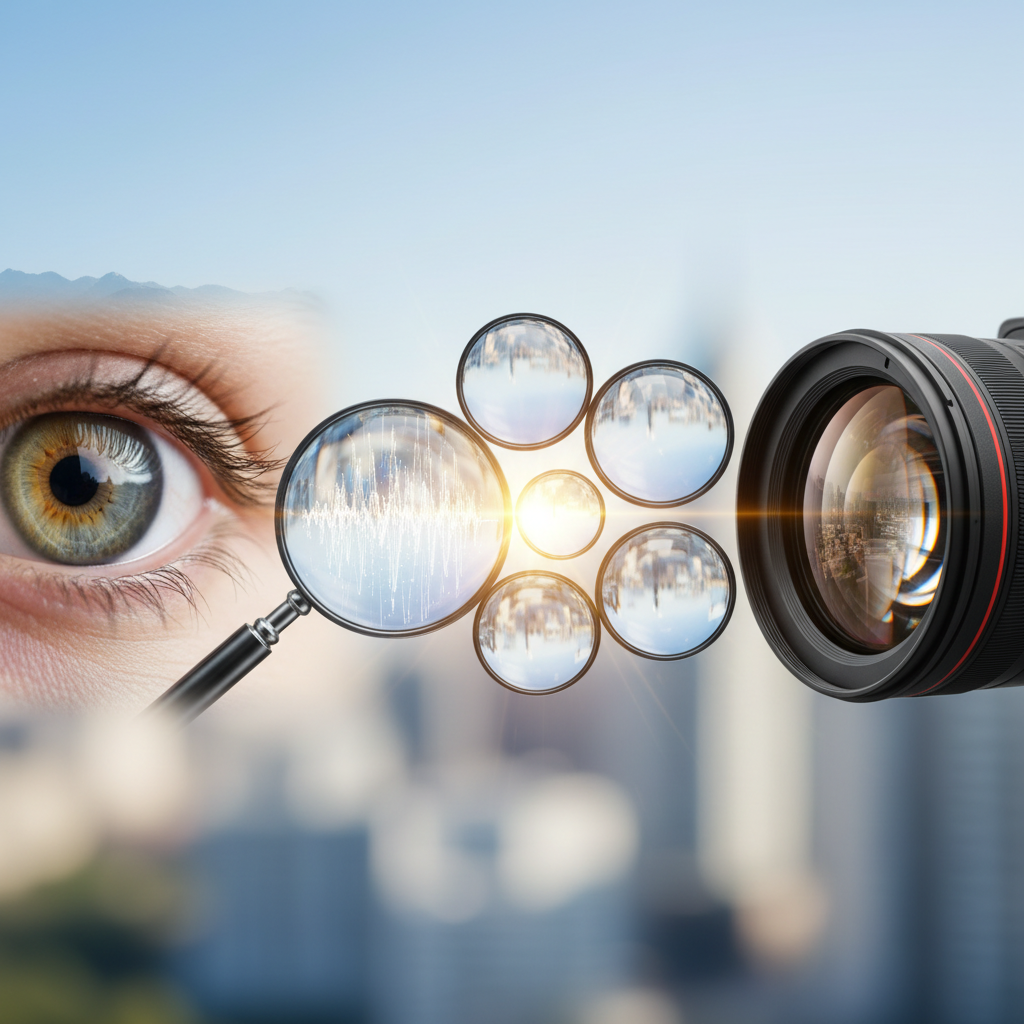
Types of Optical Lenses: Choosing the Right One for Your Needs
When selecting optical lenses, understanding the various types available can significantly influence your vision and photography. There are several categories of lenses to consider, each serving a unique purpose. For instance, single vision lenses are ideal for correcting myopia or hyperopia, providing clear vision at one distance. In contrast, bifocal and progressive lenses cater to those needing multifocal corrections, allowing for seamless vision transitions between near and far distances.
In photography, the choice of lens is equally crucial. Wide-angle lenses are favored for landscape photography, capturing expansive scenes with stunning detail. Telephoto lenses, on the other hand, are perfect for wildlife or sports photography, enabling you to zoom in on distant subjects without compromising clarity. Additionally, macro lenses excel in close-up shots, revealing intricate details often overlooked. By understanding your specific needs and the characteristics of each lens type, you can make informed decisions that enhance both your vision and photographic endeavors.
What is Optical Lenses and How They Enhance Your Vision and Photography - Types of Optical Lenses: Choosing the Right One for Your Needs
| Type of Optical Lens |
Purpose |
Common Uses |
Recommended For |
| Convex Lens |
Magnifies |
Reading glasses, cameras |
People with farsightedness |
| Concave Lens |
Diminishes |
Eyeglasses for nearsightedness |
People with nearsightedness |
| Bifocal Lens |
Provides two different optical powers |
Multifunctional visual tasks |
Older adults |
| Trifocal Lens |
Three optical powers |
Near, intermediate, and far vision |
People with presbyopia |
| Photochromic Lens |
Adapts to light |
Outdoor eyewear |
Active individuals |
| Aspheric Lens |
Reduces distortion |
High prescription glasses |
People with strong prescriptions |
The Role of Optical Lenses in Enhancing Vision Clarity
Optical lenses play a crucial role in enhancing vision clarity, serving as vital components in a variety of devices, from eyeglasses to sophisticated cameras. These lenses function by bending light rays to focus images more clearly on the retina or the camera sensor. For individuals with visual impairments, corrective lenses like concave or convex designs correct refractive errors, allowing for a sharper and more accurate perception of their surroundings. This enhancement is pivotal not only for daily activities but also for ensuring safety and efficiency in tasks requiring precision.
In the realm of photography, optical lenses significantly elevate the quality of images captured. Different lens types, such as wide-angle, telephoto, and macro, each provide unique advantages, enabling photographers to achieve their creative visions. The ability of these lenses to manipulate light and depth of field allows for stunning effects, enhancing the clarity and detail within photographs. This interplay of light and optics not only improves technical aspects but also transforms the emotional impact of an image, demonstrating how integral optical lenses are to the art of photography.
How Optical Lenses Transform Photography for Professionals and Enthusiasts
Optical lenses play a pivotal role in elevating both vision and photography, transforming how professionals and enthusiasts capture the world around them. According to a report by Grand View Research, the global optical lens market is expected to reach USD 29.0 billion by 2025, indicating a growing reliance on innovative lens technologies among photography enthusiasts and professionals alike. High-quality optical lenses enhance image clarity, depth, and contrast, allowing photographers to create stunning visuals that resonate with their audience.
In photography, the choice of lens can significantly affect the final output. The introduction of specialized lens types, such as macro, telephoto, and wide-angle, has allowed photographers to explore new dimensions in their art. For instance, a study by the International Journal of Photographic Science revealed that using a high-performance lens can increase light transmission efficiency by up to 20%, directly impacting the quality of images taken in low-light conditions. As technology advances, the integration of coatings and advanced materials in optical lenses further improves performance, paving the way for both amateurs and professionals to push the boundaries of photographic expression. The rise of social media platforms also emphasizes the importance of imaging quality, making optical lenses a critical investment for anyone looking to elevate their photography skills.

Future Innovations in Optical Lens Technology and Their Impact on Vision and Imaging
The field of optical lens technology is poised for transformative advancements that promise to enhance both vision correction and photography. According to a report by Grand View Research, the global optical lenses market is expected to expand at a CAGR of 8.3% from 2021 to 2028, suggesting a substantial increase in demand for innovative lens solutions. Emerging technologies, such as adaptive optics, are set to revolutionize lens design, allowing for real-time corrections that could significantly improve vision acuity in challenging conditions, such as low light or high glare situations.
In the realm of photography, innovations like liquid lenses and smart lenses are gaining traction. A recent study from MarketsandMarkets predicts that the global smart lens market size will reach $27.8 billion by 2023, driven by advancements in augmented reality (AR) and virtual reality (VR) applications. These lenses offer a higher degree of customization and flexibility, enabling photographers to capture images with unmatched clarity and depth. As manufacturers invest in research and development to meet these growing demands, the future of optical lenses promises not only enhanced visual experiences but also a new era of creativity in imaging technologies.
Impact of Optical Lens Innovations on Vision and Photography
This chart illustrates the percentage improvements in various aspects of vision and photography due to advancements in optical lens technology over the past decade.