How to Choose the Best Prescription Lenses for Your Needs?
Choosing the right Prescription Lenses can significantly impact your vision and daily life. Dr. Sarah Thompson, an optometry expert, emphasizes, "The right lenses can transform how you see the world." With numerous options available, it's crucial to understand what fits your unique needs best.
Navigating through different types of Prescription Lenses may seem overwhelming. Factors like lens material, coatings, and customization options all play essential roles in your selection. Each choice has specific benefits that cater to various lifestyle requirements. For instance, if you spend ample time in front of a screen, anti-reflective coatings can enhance visual comfort.
It's important to reflect on your daily activities. Are you active in sports? Do you work in an environment with bright lights? These realities will influence your decision-making process. Although selecting the perfect pair might feel daunting, it provides an opportunity to enhance your vision quality. Understanding your needs will lead to a more satisfying lens experience.

Understanding Different Types of Prescription Lenses Available Today
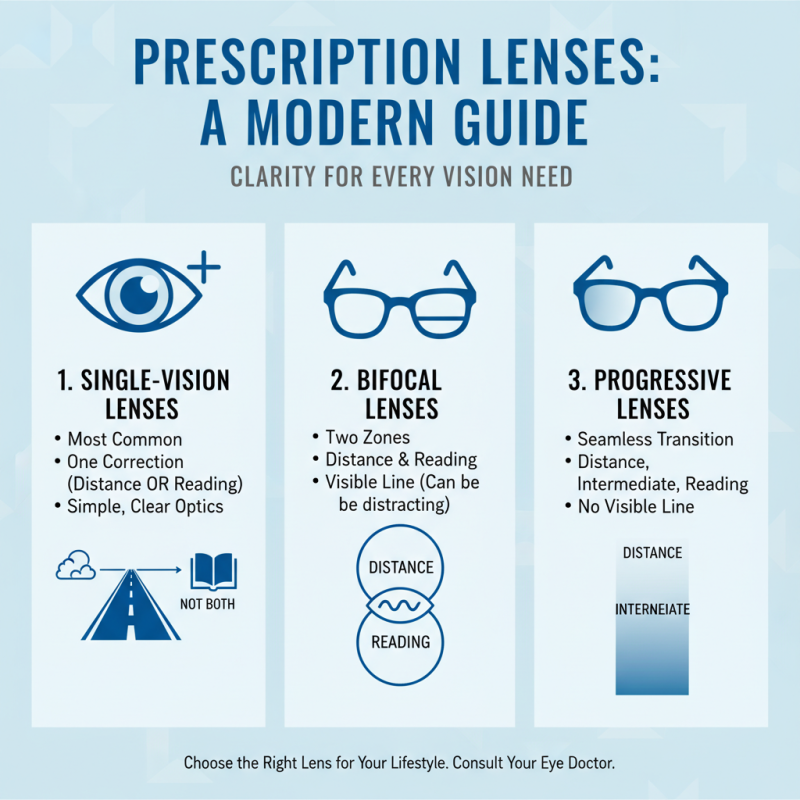
When choosing prescription lenses, it’s essential to understand the different types available today. Single vision lenses are the most common, designed for one specific vision correction. They can help with distance or reading but not both. Bifocal lenses offer two distinct areas for seeing at different distances. The line separating the two zones may be visible, which some people find distracting.
Progressive lenses provide a more seamless experience. They allow for smooth transitions between distance, intermediate, and near vision without visible lines. Many users appreciate these for their versatility, as they eliminate the need for multiple pairs of glasses. However, adapting to progressive lenses can take time.
Tips: Consider what activities you do daily. If you spend hours on a computer, ask for lenses that reduce glare and eye strain. For those who enjoy outdoor activities, lenses with UV protection are vital. Don’t forget to consult with your eye care professional to find the best option for your lifestyle.
Remember, comfort with your lenses can take time. Some people experience distortion at first, especially with multifocal options. It’s crucial to have open communication with your optometrist about any challenges you face. Your eyes are unique, and your lenses should reflect that. Choose wisely for your specific needs.
Factors to Consider When Choosing Prescription Lenses
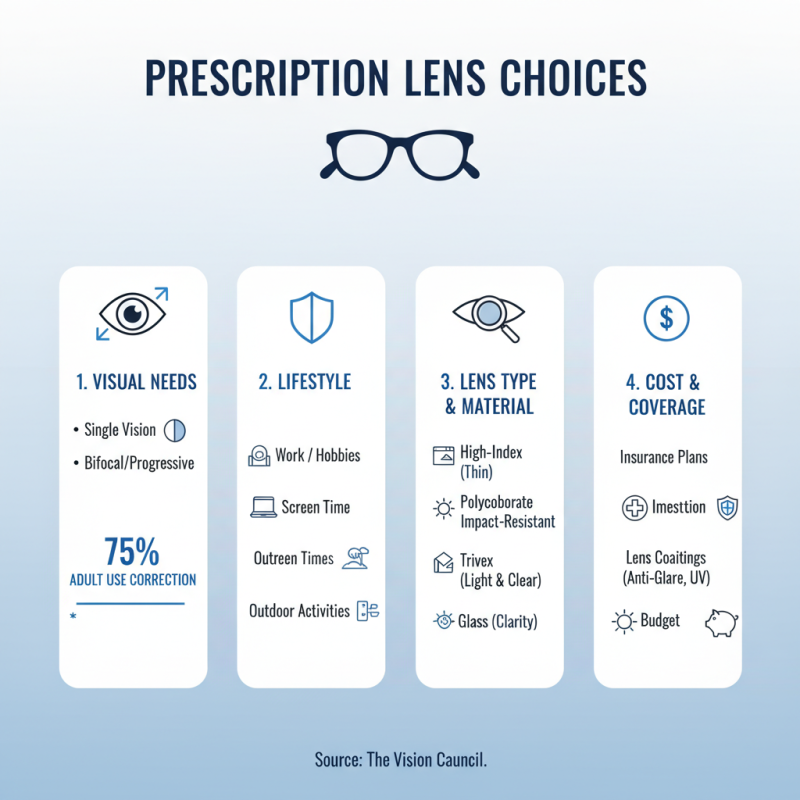
Choosing prescription lenses can significantly impact your vision and quality of life. There are several factors to consider when making this decision. Understanding your specific visual needs is crucial. For instance, approximately 75% of adults use some form of vision correction, according to the Vision Council. Knowing whether you need single vision, bifocals, or progressive lenses helps focus your choices.
Another important factor is lens material. High-index lenses are thinner and lighter but may cost more. Studies suggest that polycarbonate lenses are about 10 times more impact-resistant than standard plastic lenses. This makes them a great option for active lifestyles or children. Anti-reflective coatings are another feature that enhances vision quality, especially during nighttime driving. They reduce glare and reflections, improving overall visual clarity.
Finally, consider your lifestyle. If you’re often outside, photochromic lenses that darken in sunlight can be beneficial. But they may not darken adequately inside vehicles, a limitation worth noting. Reflect on your daily activities and how they affect your lens choice. Gathering expert advice and client testimonials can enhance decision-making.
The Importance of Lens Material and Its Impact on Vision
Choosing the right lens material is crucial for your vision. High-quality lenses can significantly enhance visual clarity and comfort. According to industry studies, lens material influences not just optical performance but also the durability and weight of eyewear. Polycarbonate is known for its impact resistance, making it a favored choice for active lifestyles. However, it can scratch more easily than other materials.
Tip: Consider your daily activities when selecting lens material. If you lead an active lifestyle, prioritize impact-resistant materials like polycarbonate or Trivex.
Another popular option is high-index plastic, which is thinner than standard plastic lenses. This material is ideal for stronger prescriptions, often providing a more aesthetically pleasing frame. However, it can be more expensive, and some find it less durable than other options.
Tip: Always balance aesthetics with functionality. If you value style, high-index lenses may be worth the investment.
It’s essential to reflect on your unique vision needs when selecting lenses. Don’t hesitate to consult an eye care professional to discuss options that suit your lifestyle. Your vision deserves the best.
How to Choose the Best Prescription Lenses for Your Needs?
| Lens Material |
Benefits |
Considerations |
Best For |
| Plastic (CR-39) |
Lightweight, affordable, good optical quality |
Less impact-resistant than others |
General use, low prescriptions |
| Polycarbonate |
Impact-resistant, lightweight, UV protection |
May have some distortion |
Children, sports, active lifestyles |
| High-Index Plastic |
Thinner, lighter for strong prescriptions |
More expensive, potential for glare |
Strong prescriptions, fashion eyewear |
| Glass |
Superior optical clarity, scratch-resistant |
Heavier, can break easily |
Fashion enthusiasts, low prescriptions |
| Trivex |
Lightweight, strong, excellent optical quality |
Higher price point |
Impact resistance, general use |
Exploring Lens Coatings and Their Benefits for Prescription Glasses
When selecting prescription lenses, coating options can significantly impact your visual experience.
Anti-reflective (AR) coatings reduce glare. This enhancement is vital for night driving or computer use. According to the American Academy of Ophthalmology, up to 60% of people experience digital eye strain. Hence, AR coatings are essential.
While coatings improve performance, it’s important to know their limitations. Not all coatings are scratch-resistant or smudge-proof. Some may degrade over time, losing effectiveness. It’s essential to regularly check the integrity of your lenses to maintain clarity.
Tips: Always clean your glasses with a microfiber cloth. This simple step can prolong the life of your coatings. Opt for UV protection, especially for outdoor activities. UV rays can be harmful even on cloudy days.
Consider blue light filtering lenses if you spend hours in front of screens. Research indicates that blue light can disrupt sleep patterns. Balancing lens features with your lifestyle needs is essential for optimal vision health. Make informed choices that align with your daily routine for the best results.
Consulting with an Eye Care Professional for Personalized Lens Options
Choosing the right prescription lenses is crucial for your vision health. Consulting with an eye care professional ensures you receive personalized recommendations tailored to your unique needs. According to the Vision Council, almost 75% of adults require some form of vision correction. With so many options available, professional guidance can simplify your decision-making process.
When discussing your options, be clear about your lifestyle. Activities like reading, working on screens, or engaging in sports can influence your lens choice. Eye care experts recommend considering factors like lens material and coatings. For instance, anti-reflective coatings can significantly reduce glare, enhancing visual clarity and comfort.
Tips: Always communicate any discomfort you're experiencing with your current lenses. This feedback helps professionals fine-tune their recommendations. Also, explore multifocal or progressive lenses if you're over 40. These options can address multiple vision needs without switching glasses. Remember, the best lens choice varies per individual; don’t hesitate to ask for alternatives.