How to Choose Round Lenses for Your Glasses in 2026?
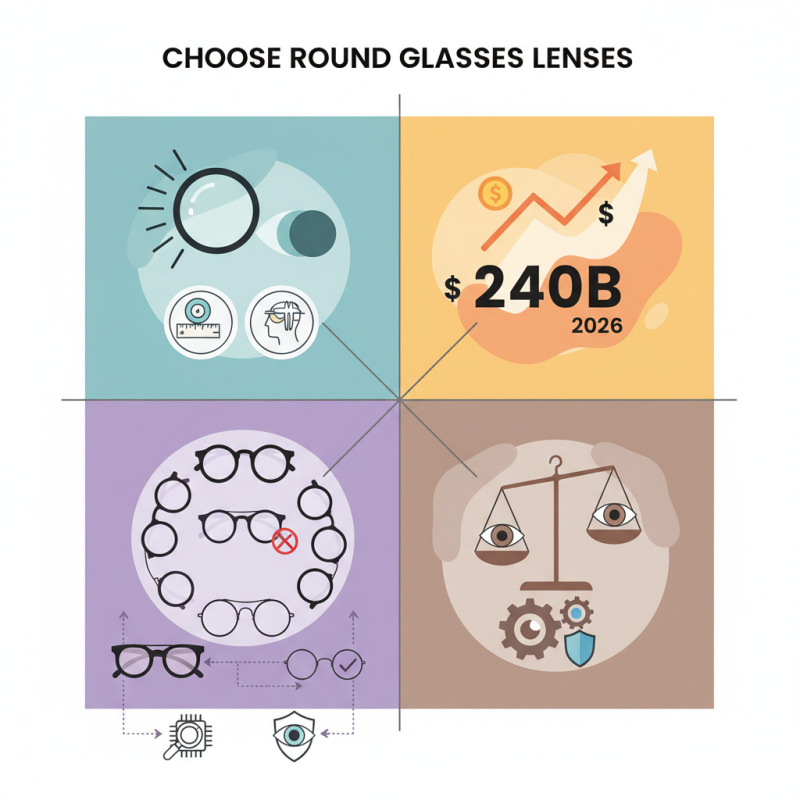
As we approach 2026, the demand for stylish.Round Lenses continues to rise. A recent report by Market Research Future indicates that the eyewear industry is projected to reach $240 billion by 2026. Round lenses have seen a surge in popularity, driven by fashion trends and increased awareness of eye health.
In choosing round lenses, it is essential to consider various factors. The size and thickness of the lenses can significantly impact both comfort and aesthetic appeal. Reports suggest that people often overlook the importance of proper lens placement; this can affect vision quality. Additionally, not all frame styles complement round lenses, leading to mismatched looks.
Some find it easy to get lost in endless options. People should take time to research the latest lens technologies. Anti-reflective coatings and blue light filtering features are crucial. Yet, many consumers still prioritize style over functionality. Rethinking this approach could lead to better satisfaction with their eyewear choices in 2026.
Understanding the Different Types of Round Lenses Available in 2026
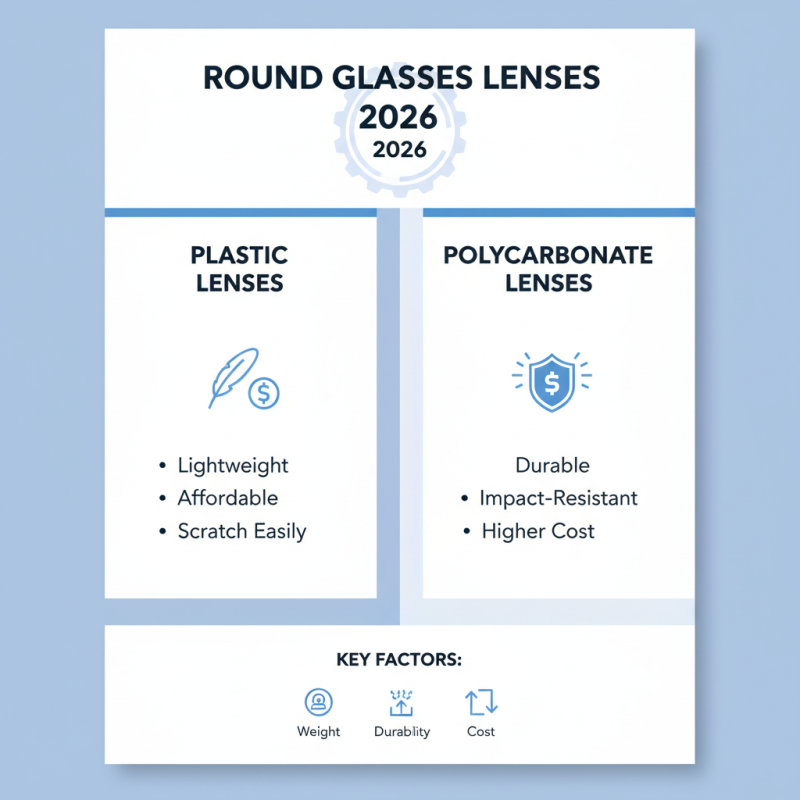
When selecting round lenses for glasses in 2026, it's essential to understand the variety available. Round lenses come in several materials, including plastic and polycarbonate. Each material has its unique traits. Weight, durability, and cost vary significantly. Plastic lenses are lightweight and affordable, but they scratch more easily.
Polycarbonate lenses are impact-resistant and ideal for an active lifestyle. They are usually a bit more expensive. The coatings are equally important. Anti-reflective coatings help reduce glare from screens. This is crucial for today's digital world.
Consider your personal style, too. Round lenses can lend a vintage charm or a modern edge, depending on their thickness. Thicker lenses may create a bolder look, while thinner options can appear more delicate. However, the wrong choice can lead to discomfort or distortion. There’s a balance needed that requires careful consideration. Reflect on your face shape and daily habits. Explore options, but be aware that trends may not always suit you.
Evaluating Your Prescription Needs for Round Lenses
Choosing the right round lenses for your glasses starts with
understanding your prescription needs. A detailed eye exam is essential.
Your optometrist will check for vision clarity and measure your eyes. These details matter when selecting lenses.
The right prescription ensures comfort and better visual performance.
Consider your daily activities. Do you spend hours in front of screens? If so, you might need specific coatings.
These could reduce glare and improve visibility. Think about your style too. Round lenses come in various materials and options.
Plastic lenses are lighter but may scratch easily.
Glass lenses offer durability but are heavier. Finding the right
balance is crucial.
Lastly, reflect on your lifestyle. Different prescriptions fit different needs. Sometimes, recommendations
can be overwhelming. Be open to adjusting your choices based on comfort. Your preferences might change over time.
Stay informed and reevaluate your needs regularly. This process leads to a better choice
in the long run.
Choosing the Right Material for Round Lenses: Pros and Cons
When selecting round lenses for your glasses, the material plays a crucial role. Different materials offer various benefits and drawbacks. For example, plastic lenses are lightweight and often more affordable. They are great for everyday use. However, plastic can scratch more easily than other options, which can be frustrating.
Glass lenses are another popular choice. They provide excellent optical clarity and scratch resistance. However, they are heavier and can break more easily upon impact. This can be a concern for active individuals.
Polycarbonate lenses are durable and provide built-in UV protection. They are less prone to breaking compared to glass. But, they may not offer the same visual quality as other materials. Each option has its unique traits, making it essential to reflect on your lifestyle before making a choice. Sometimes, the best material isn't the most obvious one. Think about your daily activities and choose accordingly.
Exploring Lens Treatments and Coatings for Enhanced Functionality
Choosing the right round lenses for glasses in 2026 involves considering lens treatments and coatings. Many users are unaware of how these enhancements can improve vision and comfort. Data from the Optical Retail Association indicates that over 50% of consumers prioritize lens functionality. Coatings can significantly impact visual experience.
Anti-reflective coatings are one of the most beneficial advancements. They reduce glare and reflections, making it easier to see in various lighting conditions. This is especially useful for those who spend long hours in front of screens. Additionally, reports suggest that 70% of digital device users experience eye strain. Enhanced lens coatings can mitigate these issues.
Photochromic lenses respond to light. They darken in sunlight, providing added protection. A study revealed that 60% of outdoor enthusiasts prefer photochromic lenses for their convenience. Furthermore, scratch-resistant coatings are crucial for maintaining lens clarity. However, users sometimes overlook these details, leading to wear and tear on their lenses. Choosing proper coatings can enhance durability and functionality, making the lens selection process vital.
Styling Tips for Selecting Frame Shapes that Complement Round Lenses
Round lenses have made a significant resurgence in eyewear fashion. According to a recent eyewear industry report, round frames are projected to account for over 30% of the market share by 2026. To choose the right frame that complements round lenses, understanding your face shape is crucial. A round face often pairs well with angular frames. This contrast enhances features and adds definition. For square or oval faces, round frames can soften harsh angles.
Choosing colors matters too. Neutral shades allow versatility. Bold colors can showcase personality but may not match every outfit. Data suggests that nearly 40% of consumers prefer versatile frames they can wear daily. Consider your wardrobe's color palette and style. Not every color will work for all occasions, and it's vital to avoid mismatched styles. Test different combinations in natural light to see how colors interact.
Lastly, comfort shouldn't be overlooked. A well-fitting frame enhances appearance and functionality. Frames should rest comfortably on your nose and not pinch or slide. Research indicates that nearly 25% of wearers experience discomfort due to poor fit. Take time in fitting sessions to ensure the perfect balance between style and comfort. These details can make a noticeable difference in how glasses feel and look.