Leave Your Message

How to Choose Non Polarized Sunglasses for Your Business

Choosing Non Polarized Sunglasses for a business requires more than selecting attractive frames. It requires evidence, testing, and a clear understanding of customer use. Grand View Research estimated the global sunglasses market at approximately USD 20.6 billion in 2023. Its forecast also indicates continued growth through 2030, supported by fashion demand, outdoor lifestyles, and stronger awareness of eye protection. The opportunity is substantial. The purchasing decision remains specific.

Non-polarized lenses can suit customers who need consistent visual information from digital displays, vehicle dashboards, or certain reflective surfaces. However, they do not reduce glare like polarized lenses. That difference must be explained honestly. The Vision Council’s Consumer inSights reports repeatedly identify comfort, appearance, and protection as important eyewear purchase factors. These findings suggest that businesses should balance appearance with practical performance. A dark lens alone does not guarantee reliable protection.

UV performance deserves careful verification. The World Health Organization links excessive ultraviolet exposure with several eye health risks and recommends suitable protective eyewear. Businesses should request supplier test documents showing UV400 or equivalent protection. They should also review applicable standards, including ISO 12312-1 and relevant national requirements. Frame durability, hinge quality, lens clarity, and packaging details matter at the retail counter. A customer may notice a loose hinge within one week. That small failure can damage trust.

There is no universal best lens. A beach customer, a driver, and an office commuter may expect different benefits. Some product choices will miss the market. That is normal, but avoidable assumptions deserve review. This guide examines lens performance, customer segments, supplier reliability, pricing, and merchandising before purchase decisions become expensive.
How to Choose Non Polarized Sunglasses for Your Business

Define Non-Polarized Sunglasses by UV400 Protection and Lens Transmission Categories

For a business, “non-polarized” describes the lens, not its UV protection. These lenses do not contain a polarizing filter, so they reduce brightness through tint rather than cutting reflected glare. A dark lens can still offer poor UV protection. Tint is not UV protection. Look for a clear UV400 claim, which indicates protection against ultraviolet wavelengths up to 400 nanometers. Ask suppliers for test documentation, not just a printed label; specifications deserve verification.

Lens transmission categories describe how much visible light passes through. On a commonly used scale, Category 0 transmits about 80–100%, Category 1 about 43–80%, Category 2 about 18–43%, and Category 3 about 8–18%. Category 4 transmits about 3–8% and is generally unsuitable for driving. Lower transmission means a darker lens, but it does not automatically mean stronger UV protection. Check which category system and labeling rules apply in your market.

Tips: Match categories to customers’ likely settings: light tints for overcast days, darker lenses for bright outdoor use. Confirm both UV400 protection and transmission category on product records. Compare samples near a window, but remember that indoor appearance cannot confirm UV performance. A neat chart helps, yet one detail is easy to miss: customers may value color accuracy as much as darkness. Ask for feedback before ordering deeply.
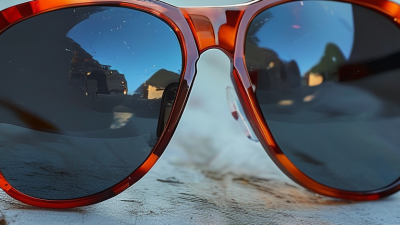

How to Choose Non-Polarized Sunglasses for Your Business

UV400 describes ultraviolet protection, while lens transmission category describes how much visible light passes through. These are separate properties: non-polarized lenses can provide UV400 protection, and a transmission category alone does not confirm UV protection.

Visible light transmission ranges shown are standard sunglass filter categories: Category 0, 80–100%; Category 1, 43–80%; Category 2, 18–43%; Category 3, 8–18%; Category 4, 3–8%. For business purchasing, verify UV400 protection separately from the lens transmission category. Category 4 lenses are not suitable for driving.

Assess Customer Demand Using Eyewear Market Growth and Seasonal Sales Data

Grand View Research valued the global sunglasses market at about US$25.3 billion in 2023 and projected 6.4% annual growth from 2024 to 2030. This indicates room for category growth, not guaranteed demand for non-polarized styles. That distinction matters. Compare your own sales by lens type, price, and customer use before expanding orders. A modest test range can reveal whether customers want everyday fashion, backup pairs, or lower-priced options.

Seasonal patterns need local evidence. NOAA’s UV Index guidance notes that UV exposure varies by time, season, and location, so a single summer forecast may not fit every store. Review weekly sell-through alongside local weather, store traffic, conversion rates, and stockouts. Compare the same weeks across prior years, then adjust for promotions and inventory gaps. Look for demand ahead of sunny travel periods, not only during peak heat. Our forecast can be wrong. Rainy weekends, late shipments, or a cold spring can distort the picture. Track those factors in your notes before treating a sales dip as weak customer interest. Keep the data simple and consistent: units sold, returns, average selling price, and remaining stock.

Compare Lens Materials, Visible Light Transmission, and Impact Standards

When sourcing non-polarized sunglasses for a business, compare lens materials against how customers will use them. Polycarbonate is lightweight and commonly chosen for active settings, while CR-39 can offer clear optics at a moderate weight. Glass may provide excellent optical clarity, but it is heavier and can break. No material should be treated as automatically impact-proof. Ask suppliers for test reports tied to the exact lens and frame combination, not just general claims.

Visible light transmission (VLT) indicates how much visible light passes through a lens. Lower VLT lenses appear darker and may suit bright outdoor conditions; higher VLT can be more practical in overcast weather. Categories vary, so compare stated percentages rather than relying on shade names. That distinction matters.

UV protection is separate from VLT, and a dark tint alone does not confirm it. Request documented UV specifications.

Check which impact standard applies to your product’s intended market and use, then verify the specific testing requirements with a qualified supplier. Standards can differ, and passing a lens test does not necessarily mean the complete eyewear passed.

In practice, the darkest sample can look impressive indoors, but that tells you little about outdoor comfort. Review samples in realistic lighting, and keep the documentation with your purchasing records.

Evaluate Frame Fit, Manufacturing Quality, MOQ, and Wholesale Pricing

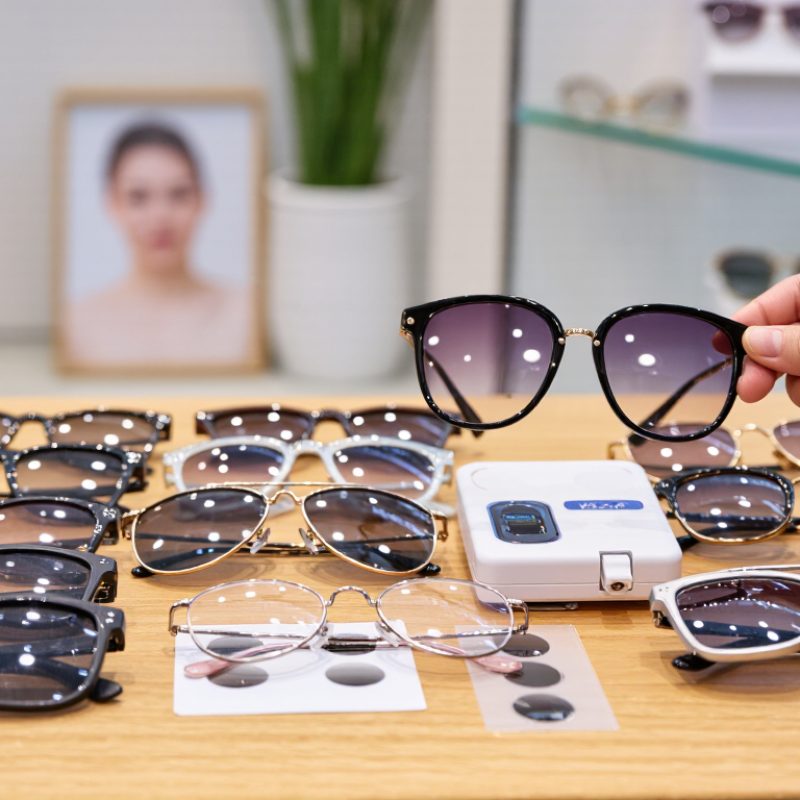
Choosing non-polarized sunglasses for your business requires more than attractive product photos. Frame fit affects customer comfort, return rates, and repeat orders. Measure lens width, bridge width, and temple length with a ruler. A frame should sit evenly without pressing the temples. Check nose pads, hinge movement, and edge finishing by hand. I have found that a stylish frame can still fail when its arms feel loose after repeated opening.

Manufacturing quality deserves direct inspection. Request samples from the same production batch whenever possible. Examine lens clarity, coating consistency, frame symmetry, and screw security under bright light. Ask whether the factory uses stable materials and documented quality checks. Small defects become expensive when they appear across hundreds of units. Still, sampling is not perfect. A single approved sample cannot reveal every production variation, so random inspections remain worthwhile.

MOQ and wholesale pricing must match your sales capacity. A low unit price may hide a large minimum order or costly packaging requirements. Request a full quotation covering product cost, case options, labeling, inspection, and shipping terms. Compare the landed cost, not only the factory price. If your first order is limited, negotiate a mixed-color MOQ instead of accepting unwanted inventory. Leave room for mistakes. Unsold colors, delayed shipments, and replacement units can reduce your real margin quickly.

Verify Compliance with ISO 12312-1, ANSI Z80.3, and Retail Labeling Rules

When choosing non-polarized sunglasses for your business, compliance should guide the purchase. Non-polarized lenses still need reliable ultraviolet protection, optical quality, and suitable impact resistance. Ask suppliers for test reports covering ISO 12312-1 and ANSI Z80.3 requirements. Check the report scope, test date, laboratory details, and exact product references.

Do not accept a generic certificate without matching it to your shipment. Compare the lens material, frame design, color, and model code with the tested sample. A useful inspection includes UV transmission, visible-light transmission, optical power, and construction quality. Hold several samples under bright light. Look for distortion near the edges. Small defects can become costly returns.

Retail labeling rules require equal attention. Confirm that packaging states the relevant protection information clearly and accurately. Review country-of-origin details, warnings, care instructions, and any required importer or distributor information. Requirements may differ between sales markets, so verify them with local authorities or qualified compliance counsel. Keep approved artwork, supplier declarations, laboratory reports, and batch records together. Labels can change during translation or redesign. That is where mistakes happen.

One practical warning: compliance documents can look complete while missing a critical test. Recheck every claim against the product. Standards also receive updates, and an older report may not support a new order. I would build a release checklist, but I would still inspect random units before retail distribution. Documentation helps. Physical verification catches surprises.