How to Choose Eyeglass Transition Lenses for Optimal Vision?
When considering the best options for eyeglass transition lenses, expert advice can steer your choice. Dr. Lisa Chang, a leading optometrist in the Eyeglass Transition industry, states, "It's crucial to find lenses that adapt to your lifestyle." This highlights the importance of personalizing your eyewear.
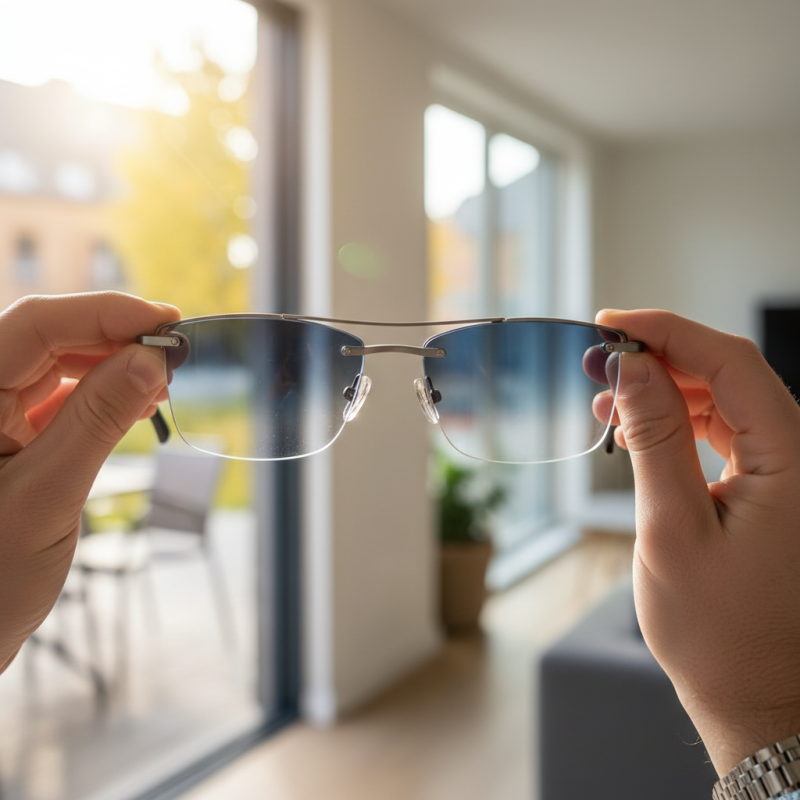
Eyeglass Transition lenses change with light. They darken outdoors and become clear indoors. This adaptability is valuable for individuals who travel between different lighting conditions. However, selecting the right lenses requires careful thought. Factors such as the lens material, the speed of transition, and UV protection should be considered.
While these lenses provide convenience, they have limitations. Not every transition lens works equally well in all situations. Some may not darken enough in the car or may take time to adjust. Understanding these nuances can prevent disappointment and ensure optimal vision. Your eyewear should enhance your sight, not complicate it.
Understanding Transition Lenses: Types and Technologies Available
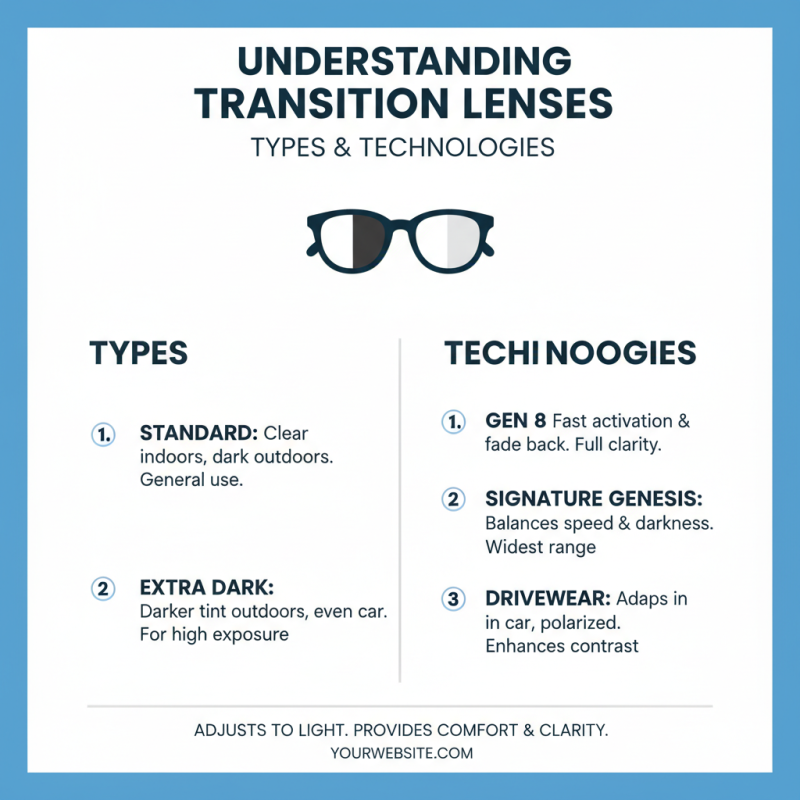
Transition lenses are a popular choice for many eyewear users. They adjust to changing light conditions, providing comfort and clarity. Understanding the types and technologies can help you make an informed choice.
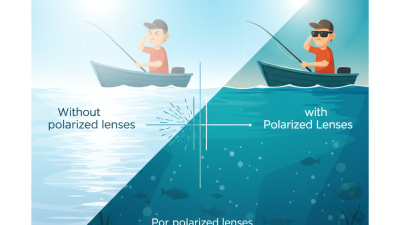
There are mainly two types of transition lenses: photochromic and polarized. Photochromic lenses darken in sunlight and revert indoors. According to a 2022 report by the Vision Council, over 72% of consumers prefer photochromic lenses for their versatility. Polarized lenses reduce glare, enhancing visual comfort, especially for outdoor activities. They are often used in conjunction with photochromic technology.
Moreover, advancements in lens technology matter. Newer transition lenses react faster and can darken more effectively than older versions. Some models now offer blue light protection, catering to digital device users. The focus on UV protection is significant, as prolonged exposure can lead to eye health issues. However, it’s essential to evaluate your lifestyle needs before choosing, as some may find that transition lenses do not fully meet their vision demands in all conditions.
Key Factors in Selecting Transition Lenses for Different Lifestyles
Choosing the right transition lenses involves understanding your lifestyle. Research shows that around 50% of lens wearers prefer lenses that adapt to varying light levels. For outdoor enthusiasts, lenses that darken quickly can provide valuable UV protection. This feature is crucial, as exposure to sunlight can lead to eye damage over time.
For individuals who work indoors and venture outside occasionally, consider lenses that offer a balance between clarity and protection. Studies suggest that transition lenses with photochromic technology can reduce glare by over 80%. This makes them suitable for those who frequently switch between environments. However, some users report slow transition times in extreme temperatures, highlighting an area where improvements could be made.
Active lifestyles demand versatile lenses. Athletes, for example, need durable and lightweight options. It's vital to choose lenses that resist scratches and impact. Yet, some may find these options less comfortable due to the weight of high-impact materials. Personal preferences play a significant role in finding the perfect fit. Understanding these nuances can greatly enhance your lens selection process.
How to Choose Eyeglass Transition Lenses for Optimal Vision?
| Lifestyle |
Key Features |
Ideal Lens Type |
Recommended Tint |
| Office Worker |
Blue light protection, minimal outdoor use |
Photochromic lenses |
Gray or brown tint |
| Outdoor Enthusiast |
High UV protection, quick transitions |
Outdoor-specific photochromics |
Dark gray or green tint |
| Athlete |
Durability, impact resistance |
Sport-specific transition lenses |
Copper or amber tint |
| Fashion-Conscious |
Style variety, color options |
Stylish photochromics |
Varied tints, designer colors |
| Senior User |
Ease of use, enhanced contrast |
Comfort-enhancing transitions |
Medium gray or brown tint |
Comparing Photochromic Lenses: Fast Activation vs. Slow Activation Rates
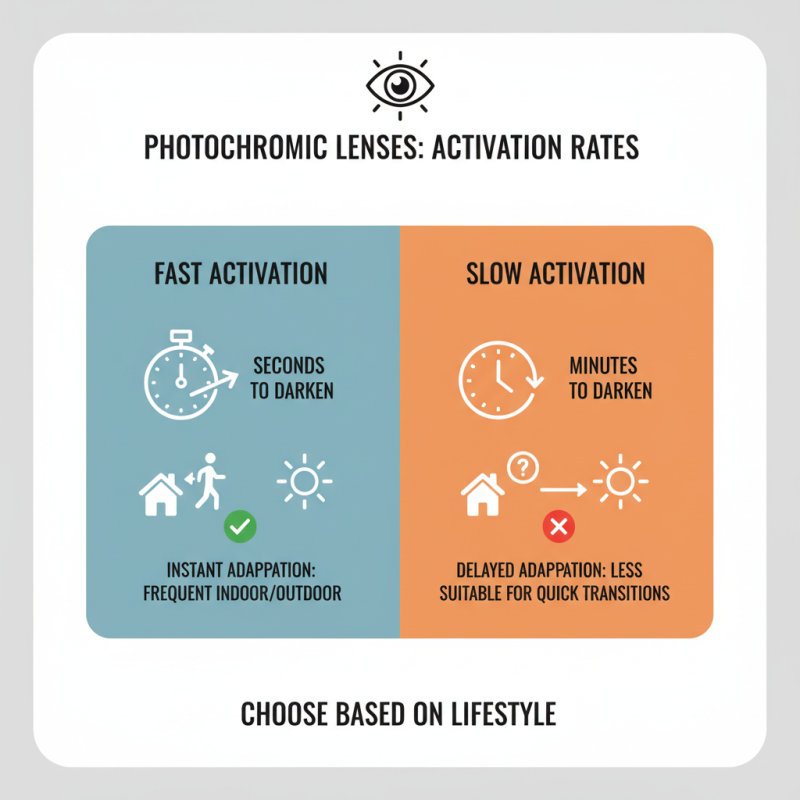
When choosing eyeglass transition lenses, the activation rate is critical. Photochromic lenses vary significantly in how quickly they adapt to changing light. Fast activation lenses can darken within seconds, providing immediate relief in bright conditions. In contrast, slow activation lenses take longer, sometimes several minutes. This delay might not be suitable for those frequently moving between indoor and outdoor environments.
Recent studies show that approximately 68% of consumers prefer fast activation lenses due to convenience. Moreover, a report by the Vision Council indicates that 75% of users find slower lenses less satisfactory during transitional lighting. However, some suggest that the gradual change of slower lenses can be gentler on the eyes. This slower adaptation could be seen as a comforting transition for those who are sensitive to sudden light changes.
It is essential to weigh these attributes carefully. Fast activation lenses may offer more immediate protection, but they can also be prone to temperature sensitivity. Conversely, slow activation lenses might appeal to those with specific sensitivities, though they may not perform as expected in rapidly changing lighting. Understanding these nuances is vital for optimal vision care and personal comfort.
UV Protection and Lens Material: Ensuring Optimal Eye Safety
When choosing eyeglass transition lenses, UV protection and lens material are critical factors. UV protection shields your eyes from harmful rays. Prolonged exposure can lead to cataracts and other eye issues. Transition lenses adapt to sunlight, but not all provide equal UV protection. Always check for certifications.
Lens material plays a vital role in both vision quality and safety. Polycarbonate lenses are lightweight yet impact-resistant. They offer excellent protection for everyday activities. However, they may scratch more easily than other materials. Glass lenses provide superior clarity but are heavier. This can be uncomfortable for prolonged wear.
Selecting the right materials requires personal assessment. Consider your daily routines and specific needs. Some materials may not suit every lifestyle. For example, active individuals may find lighter materials more comfortable. It's essential to weigh the advantages and disadvantages. Be mindful of what you prioritize. Your vision deserves the best care.
Eyeglass Transition Lenses: Comparison of Key Features
Considerations for Prescription and Non-Prescription Transition Lenses
Choosing the right transition lenses is crucial for both prescription and non-prescription users. Transition lenses adapt to changing light conditions, providing comfort and protection. According to the Vision Council, nearly 49% of adults in the U.S. use corrective lenses, making it essential to understand how to choose the right option.
For prescription users, consider your specific needs. If you work long hours outdoors, look for lenses with a high UV protection factor. Lenses that darken quickly in bright sunlight can reduce glare. Non-prescription users might prioritize style along with functionality. Clear transition lenses are an excellent choice for those who want versatility without compromising aesthetics.
Tips: Always test transition lenses for comfort. Not all lenses react the same way to UV light. Some might take longer to adjust. Also, consider the lens material.
High-index lenses are thinner and lightweight but might not offer the same transition speed.
In selecting lenses, reflect on your lifestyle. If you spend a lot of time in various light settings, the lens functionality matters. Talk to an eye care professional for detailed recommendations based on your lifestyle and vision needs. Their insights can help identify the best options for you, ensuring an optimal vision experience.