What Are the Benefits of Photochromic Polarized Sunglasses?
Photochromic Polarized Sunglasses offer a unique blend of style and functionality. These innovative lenses adapt to changing light conditions, providing enhanced vision outdoors. Imagine stepping out into the sun and watching your lenses transition smoothly to shield your eyes from glare. This adaptability makes them perfect for various activities, from driving to hiking.
In addition to their light-sensitive features, these sunglasses significantly reduce glare. This means fewer harsh reflections bouncing off surfaces, which can cause eye strain. For those who love the outdoors, this is a game-changer. However, it’s worth reflecting on their limitations as well. Not all photochromic lenses darken equally in every environment.
Choosing the right pair requires consideration of factors like UV protection and lens quality. Photochromic Polarized Sunglasses not only enhance comfort but also offer a stylish protection solution. Despite their benefits, some users may overlook lens care or durability. These aspects warrant attention to fully enjoy their advantages.

Understanding Photochromic Lenses: The Science Behind Them
Photochromic lenses are an intriguing innovation. They adapt to changing light conditions. These lenses darken in bright sunlight and return to clear indoors. This dynamic response is due to a special chemical process. When exposed to UV rays, molecules in the lenses rearrange, causing them to darken.
Many find photochromic lenses convenient. They eliminate the need for multiple pairs of glasses. However, some users report slow transitions. In certain conditions, adjustments are not quick enough. This can be frustrating, especially when moving between indoors and outdoors.
The polarized aspect further reduces glare. This is particularly beneficial for driving or outdoor activities. Glare can be a severe distraction. Combining these features offers a unique eyewear solution. Yet, reflections from water or snow still require caution. Understanding these limitations is crucial for making informed choices.
Benefits of Photochromic Polarized Sunglasses
This bar chart displays the benefits of photochromic polarized sunglasses on a scale of 1 to 10. The ratings highlight key advantages such as UV protection, glare reduction, adaptability to changing light conditions, comfort for wearers, and enhanced visual clarity. These features make photochromic polarized sunglasses a popular choice among users seeking optimal eye protection and comfort.
How Polarized Sunglasses Enhance Visual Comfort and Clarity
Polarized sunglasses are a game-changer for outdoor enthusiasts. They reduce glare from reflective surfaces, enhancing clarity. When sunlight hits water, roads, or snow, it creates harsh glare. Polarized lenses help cut through this glare, providing a clearer view. This makes activities like fishing or driving much safer and more enjoyable.
Visual comfort is incredibly important during long hours outdoors. Traditional sunglasses might not filter out glare effectively. This can lead to squinting and eye strain. Polarized lenses, on the other hand, allow for comfortable, clear vision. They enhance colors and contrast, making landscapes more vibrant. Yet, some users may notice distortions when looking at digital screens, which can be frustrating.
Photochromic features add to the appeal. These lenses darken in bright sunlight and lighten indoors. This adaptability is beneficial, but we must remember they don’t work instantly. There’s a slight delay when moving between light conditions. Understanding this can enhance the user experience. Opting for polarized photochromic sunglasses offers both visual comfort and protection, yet it’s essential to be aware of their limitations.
The Benefits of Combining Photochromic and Polarized Technologies
Photochromic polarized sunglasses offer a unique blend of advanced technologies that enhance visual comfort and protection. Photochromic lenses adapt to changing light conditions, darkening in bright sunlight and lightening indoors. This feature is particularly beneficial for individuals who frequently move between indoor and outdoor settings. Research shows that these lenses can block up to 100% of harmful UVA and UVB rays, providing essential eye protection.
Combining photochromic and polarized technologies significantly reduces glare from reflective surfaces, such as water or asphalt. This is crucial for activities like driving and water sports. According to a study conducted by the Vision Council, glare can impair visibility and reaction times by up to 30%. These sunglasses not only improve clarity but also enhance safety during outdoor activities, making them a favored choice among outdoor enthusiasts.
One potential drawback is the variability in response time to light changes. In some cases, photochromic lenses may not darken quickly enough in bright sunlight. This delay could lead to moments of discomfort. Understanding these limitations is essential for consumers seeking optimal performance. Ultimately, while the combination offers impressive benefits, it's important to recognize the nuances in how different lenses react.
Applications and Scenarios for Using Photochromic Polarized Sunglasses
Photochromic polarized sunglasses are incredibly versatile. They adapt to changing light conditions, making them suitable for various activities. Whether hiking, cycling, or driving, these glasses reduce glare and enhance visibility. They transform in sunlight, providing optimal comfort during long days outdoors. Imagine trekking along a mountain trail. The sun's intense rays can be brutal. With these sunglasses, your eyes remain protected and strain-free.
Urban settings also benefit from photochromic technology. Walking in and out of buildings often leads to drastic light shifts. These sunglasses adjust quickly, allowing for clarity in changing environments. They lighten indoors and darken outdoors. This feature can be lifesaving while driving. You can focus more on the road without frequent adjustments. However, not all users find them perfect. Some experience a slight delay in transition, which can be frustrating.
For those who enjoy sports, these sunglasses are game-changers. They improve contrast and clarity, especially in bright conditions. Yet, consider the potential drawbacks. Over time, the photochromic layer may degrade. It’s essential to monitor wear and tear. If you rely on them daily, replacing them periodically is wise. Remember, personal preference plays a significant role. What works for one may not suit another.
Choosing the Right Photochromic Polarized Sunglasses for Your Needs
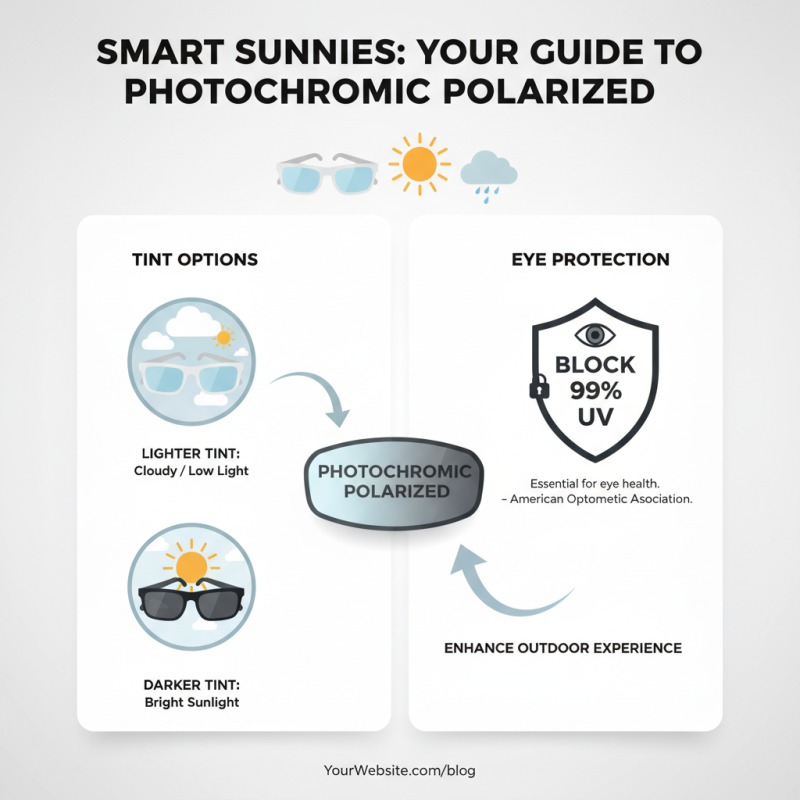
Choosing the right photochromic polarized sunglasses can greatly enhance your outdoor experience. First, consider tint options. Lighter tints work well for cloudy days, while darker tints are best for bright sunlight. According to a report by the American Optometric Association, sunglasses that block 99% of UV rays are essential for protecting your eyes.
Fit and comfort are key factors as well. Ill-fitting sunglasses can slide down your nose or pinch your temples. This can be distracting, especially during sports or outdoor activities. So, look for models with adjustable nose pads and flexible temples. A study published in the Journal of Optometry highlights that comfort contributes to longer wear times, ensuring your eyes remain protected.
Tips: Test sunglasses in natural light before purchasing. Check for distortions when wearing them. Ensure they fit snugly but comfortably. Always choose polarized lenses to reduce glare and enhance visual clarity. Remember, even small imperfections can impact your enjoyment of the outdoors. Take your time to find the best pair that fits your lifestyle and aesthetic.